Stay up to date with the latest news
Subscribe to our telegram channel

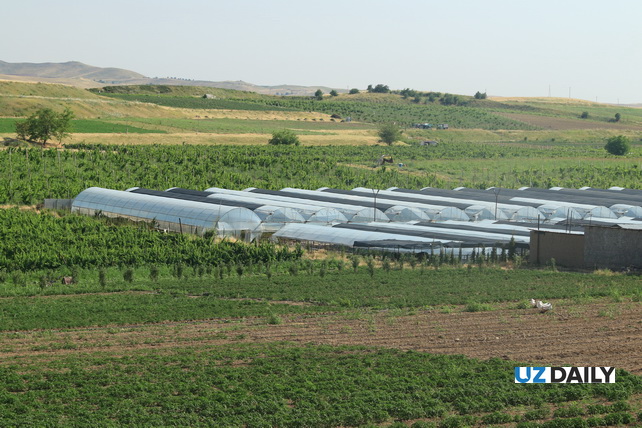
Uzbekistan to relocate greenhouses to Surkhandarya zone
Tashkent, Uzbekistan (UzDaily.com) — Uzbekistan’s Cabinet of Ministers has approved a plan to relocate greenhouse farms from Tashkent and the Tashkent region to Surkhandarya region as part of efforts to adapt agriculture to climate change, strengthen food security, and reduce environmental pressure on the capital.
The resolution No. 162, adopted on 9 April 2026 and signed by Prime Minister Abdulla Aripov, sets out measures for the further development of greenhouse farming in Surkhandarya.
The document предусматривает relocation of greenhouse enterprises to Surkhandarya, where climatic conditions are considered more suitable for such activities, alongside financial support and the creation of modern infrastructure.
It notes that, under a presidential decree dated 25 March 2026, a free economic zone, “Surkhon-Agro,” has been established in Sherabad district, where the relocated greenhouse operations will be concentrated.
The National Committee on Ecology and Climate Change, the Ministry of Agriculture, and regional authorities have been instructed to support the transfer of greenhouse farms that negatively affect the environment and public health.
A mechanism to encourage voluntary relocation has been introduced. Lists of individuals and companies willing to participate in auctions for vacated land plots will be compiled by the Ministry of Agriculture and local authorities.
Land freed from greenhouse use may be repurposed for horticulture, viticulture, nurseries, or the creation of green spaces. Construction of permanent structures on such land is prohibited, and greenhouse activity must cease.
Financial support measures include the extension of repayment periods for domestic and foreign loans used for greenhouse projects to up to five years, including a grace period of three years. Existing state guarantees and interest subsidies will remain in place.
Until 1 April 2028, costs related to dismantling, transporting, and reinstalling greenhouse structures in the new zone will be partially compensated from the state environmental fund, within established limits.
From 1 June 2026, the registration of new greenhouses using coal, fuel oil, or other polluting materials will be banned in Tashkent and several districts of Tashkent region.
From 1 August 2026, stricter measures will apply to existing greenhouses in these areas. Natural gas supply will be fully discontinued, and contracts with gas providers will be terminated in accordance with regulations.
Water usage tariffs for greenhouse farms will be set at five times the highest industrial rates. Environmental compensation payments for pollution caused by burning coal, tires, fuel oil, plastics, rubber, and similar materials, as well as for waste disposal, will increase twentyfold, with existing environmental permits subject to review.
Enterprises receiving state support will also face restrictions if they fail to meet environmental standards.
An exception is предусмотрено for educational and research institutions engaged in testing new crop varieties, seed production, and adaptation of foreign technologies, provided they comply with environmental requirements.
The Ministry of Agriculture, together with the Ministry of Economy and Finance and the National Committee on Ecology, has been tasked with submitting proposals on subsidy mechanisms within two months and preparing a master plan for the Surkhon-Agro zone by 1 September 2026.
The Ministry of Investment, Industry and Trade, along with the Ministry of Agriculture and the Ministry of Foreign Affairs, is to take measures by 1 May 2026 to attract strategic investors, international organizations, and financial institutions to the zone. Uzbek embassies and trade representatives abroad are instructed to actively support these efforts.
The Ministry of Economy and Finance, together with the Tax Committee, is also tasked with proposing amendments to the Tax Code by 1 September 2026 to increase land and property tax rates for greenhouse farms in Tashkent and affected districts to ten times the current base rates.
Additionally, the Ministry of Construction and Housing and Communal Services, along with the Ministry of Employment and local authorities, is required to develop within three months a program for building housing and temporary accommodation for specialists, with construction to be completed by the end of 2026 using off-budget funds.