Stay up to date with the latest news
Subscribe to our telegram channel

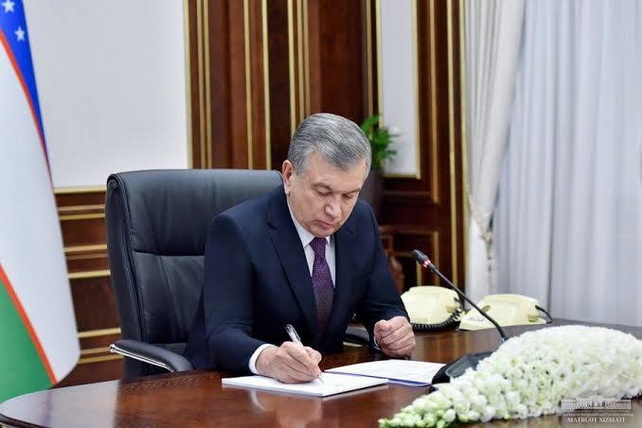
Uzbekistan Tightens Oversight of Construction Sector to Reduce Shadow Economy
Tashkent, Uzbekistan (UzDaily.com) — The President of Uzbekistan has signed a decree on comprehensive measures aimed at reducing the shadow economy in the construction sector. In 2024, the volume of unobserved economic activity exceeded 505 trillion soums, accounting for 34.8% of the country’s GDP.
The largest share of the hidden economy is concentrated in agriculture, construction, and the services sector. The unobserved economy includes both informal and shadow activities: the former covers small businesses and services operating without registration, while the latter consists of legal activities concealed from the state, such as underreporting of income and “envelope” payments.
Starting from 1 April 2026, transactions involving real estate and vehicles will be conducted exclusively via bank cards and electronic payment systems. Cashless payments will be mandatory for transactions exceeding 25 million soums.
The tax base for real estate and construction materials will be determined according to market value, with a calculation mechanism, based on location-specific data, to be approved by 1 February.
Legal entities in construction and trade are required to maintain detailed accounting of assets contributed to their charter capital, including electronic invoices, online cash register receipts, customs declarations, and notarized contracts. All operations must be recorded in the tax authorities’ database via the personal account within 15 days.
Priority measures include restricting participation of companies with repeated tax violations in public procurement and tenders, increasing liability for concealing jobs, and mandatory determination of the tax base for construction objects at market value. By 1 February, the Cabinet of Ministers will propose a cashback system for citizens, returning part of the VAT paid on the purchase of residential or commercial premises in new buildings when payments are made through banks.
The tax authorities will integrate full accounting of contractor and subcontractor agreements via the platform my3.soliq.uz. Electronic invoices must include the project ID for budget-funded objects, as well as the cadastral or registration number for commercial projects. The electronic registration of invoices and bank payments will also be implemented for notarized real estate transactions.
By 1 May 2026, the “Transparent Construction” system will be upgraded: project and estimate documentation will be integrated with tax systems, a national catalog of construction resources will be created, and digitalization will cover contracts and certificates of completed work with mandatory reflection of the actual payroll.
Additionally, procedures will be established for including inventory and materials in the charter capital of construction and trading companies only with supporting documentation and following state registration.