Stay up to date with the latest news
Subscribe to our telegram channel

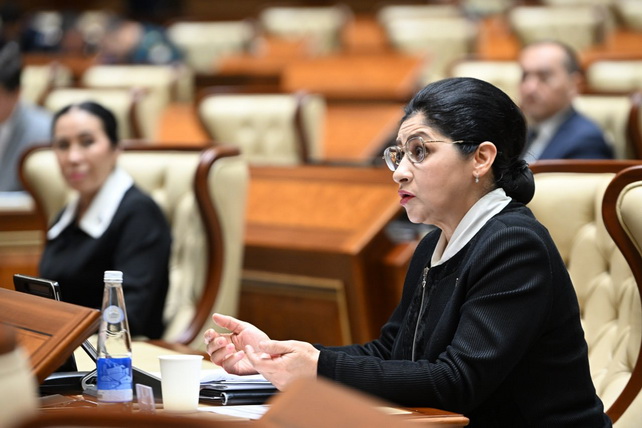
Uzbekistan Senate Reviews Ombudsman’s 2025 Human Rights Report
Tashkent, Uzbekistan (UzDaily.com) — During the fourteenth plenary session of the Senate of the Oliy Majlis of the Republic of Uzbekistan, the report of the Authorized Person for Human Rights (Ombudsman) on activities throughout 2025 was reviewed.
It was noted that during the reporting period, the Ombudsman’s office intensified its parliamentary oversight regarding the observance of civil rights and freedoms, legislative improvement, the development of the national preventive mechanism, international cooperation, and the enhancement of legal literacy among the population.
According to the data provided, the Ombudsman received 26,372 appeals in 2025, representing an increase of 2,950 compared to 2024 (+12.6%). The highest number of appeals was recorded in the Kashkadarya region (4,159), the city of Tashkent (3,599), and the Surkhandarya region (2,769), while the lowest numbers were seen in the Republic of Karakalpakstan (681) and the Syrdarya region (696).
In accordance with a Senate resolution dated March 18, 2025, field studies were conducted in the Kasan district of Kashkadarya and the Denau district of Surkhandarya, where the highest volume of grievances was noted. Open dialogues were organized in more than 20 mahallas with representatives of state bodies and civil society, resulting in proposals to improve the appeal-handling system.
Particular attention was paid to the protection of women's rights. In response to an increase in reports of violence, the "Equality and Respect" platform was launched. Over 150 group and individual meetings were held with survivors in rehabilitation centers, providing practical assistance and forming proposals to strengthen parliamentary control in this area.
Based on an analysis of appeals and monitoring activities, the Ombudsman developed three bills aimed at strengthening human rights guarantees. One legislative proposal has already been adopted by the Legislative Chamber, and state bodies have prepared 11 regulatory acts based on the Ombudsman’s recommendations.
A total of 194 enforcement measures were introduced to address human rights violations, with 82% resolved in favor of the citizens. Following these appeals, a total of 11.082 billion soums was recovered, including housing compensation (3.936 billion soums), labor-related payments (2.715 billion soums), debts and losses (3.361 billion soums), and alimony (over 604 million soums). Additionally, 118 officials were held accountable for rights violations.
The Ombudsman conducted 954 monitoring visits to institutions with restricted freedom of movement, organizing over 11,000 collective and 5,487 individual interviews with convicts and detainees. Consequently, living conditions in several institutions were improved, over 8.5 billion soums were allocated for upgrades, and temporary detention centers in the Chinaz, Kibray, and Yukorichirchik districts of the Tashkent region were liquidated.
Internationally, the report highlighted the office's accession to the Asia-Pacific Forum of National Human Rights Institutions, the signing of a 2025–2026 roadmap with the Human Rights Commissioner of the Russian Federation, and cooperation agreements with the Danish Ombudsman and the Friedrich Ebert Foundation.
However, senators also pointed to ongoing challenges. Notably, 32% of all appeals were related to economic rights—a 26% increase over 2024—primarily concerning judicial decisions, private property protection, and labor rights. A significant rise in appeals regarding violence against women was also recorded, reaching 585 cases, nearly doubling the 2024 figure of 294. Furthermore, the workload for regional representatives increased sharply, with 7,010 appeals received compared to 3,857 the previous year.
Following the discussion, the Senate adopted a resolution defining tasks to further improve human rights protection mechanisms, strengthen violation prevention, and increase the efficiency of regional representatives.