Stay up to date with the latest news
Subscribe to our telegram channel

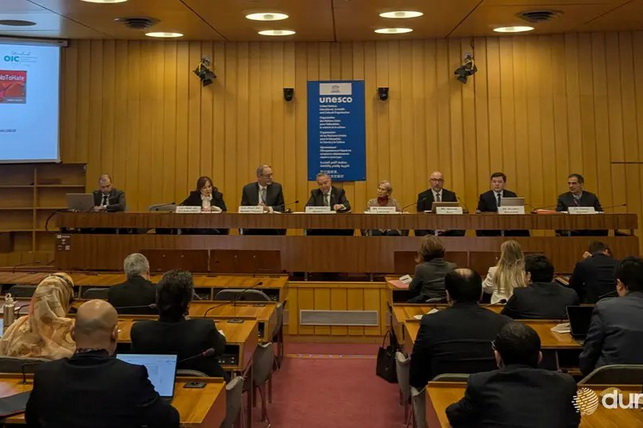
Uzbekistan Promotes Enlightened Islam and Tolerance at UNESCO
Tashkent, Uzbekistan (UzDaily.com) — A high-level international panel discussion, "Combating Islamophobia: Promoting Human Rights through Education, Culture, and Dialogue," was held at UNESCO headquarters on March 15, coinciding with the International Day to Combat Islamophobia.
The event was organized with the support of Uzbekistan’s Permanent Delegation to UNESCO and the OIC Group at UNESCO. Uzbekistan presented its approaches to promoting enlightened Islam, interfaith harmony, and a culture of tolerance.
During the discussion, participants emphasized that the rich intellectual heritage of Mawarannahr, associated with figures such as Imam Bukhari, Imam Tirmidhi, Imam al-Maturidi, Ibn Sina, Al-Biruni, and Al-Khwarizmi, continues to serve as a strong spiritual and scientific foundation for humanistic values.
Special attention was given to systematic efforts to prevent radicalism, extremism, and Islamophobia. Key initiatives highlighted included the presidential resolution "Enlightenment and Religious Tolerance," presented at the 72nd session of the UN General Assembly, as well as Uzbekistan’s active international engagement in promoting interfaith harmony and a culture of peace.
The discussion also featured the Islamic Civilization Center in Uzbekistan, a scientific, educational, and museum platform that integrates the country’s historical and spiritual heritage with modern educational and cultural projects. The Center focuses on studying and preserving Islamic heritage, including manuscripts, artifacts, and the contributions of the region’s eminent thinkers, while promoting these materials internationally through exhibitions, digital content, and scientific catalogs.
Shahzod Islomov, Deputy Director of the Imam al-Maturidi International Research Center, detailed Uzbekistan’s approaches to fostering religious tolerance, intercultural dialogue, and combating Islamophobia through education, culture, and the preservation of scientific heritage.
UNESCO representatives praised Uzbekistan’s reforms in interreligious tolerance and freedom of conscience, noting the country’s contributions to building an inclusive society and advancing the international agenda for intercivilizational dialogue.
Over 200 participants, including representatives of member states, the diplomatic corps, and experts, engaged in discussions on practical measures to counter discrimination and intolerance. Miguel Ángel Moratinos, High Representative of the UN Alliance of Civilizations, stressed that combating anti-Muslim hatred requires concrete actions in education and culture beyond formal declarations.