Stay up to date with the latest news
Subscribe to our telegram channel

Uzbekistan Plans Expansion of Aviation, Railways, and Highways by 2026
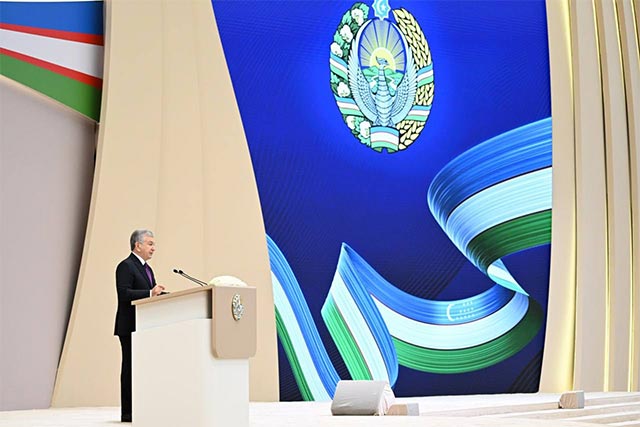
Tashkent, Uzbekistan (UzDaily.com) — President of Uzbekistan Shavkat Mirziyoyev, in his address to the parliament and the nation, announced large-scale plans for the development of the country’s transport sector in 2026. According to the President, the growth in tourist flows necessitates doubling passenger capacity in aviation and on the railways.
In civil aviation, the fleet of domestic airlines is expected to reach 120 aircraft by 2026, and 180 within the next five years. To stimulate domestic air travel, a new subsidy system will be introduced: a fixed subsidy will be provided for each ticket sold regardless of price, reducing travel costs and increasing demand. Additionally, a University of Civil Aviation will be established to train pilots, ground staff, and airport management specialists.
In the railway sector, a five-year development program will begin. In the next year, 110 km of new lines are planned to connect Bukinsky, Pskentsky, Bekabad, and Bayaut districts, as well as the city of Nurafshan with the capital. Construction of the high-speed Tashkent–Samarkand line will also commence. Key stations in Tashkent, Samarkand, Bukhara, Khiva, and Navoi will be transferred to management under a public-private partnership model.
For the road network, a five-year program will be implemented to improve road quality and transit capacity. Some 4,000 km of highways connecting key regions will be upgraded to international motorway standards. In 2026, reconstruction of 300 km of roads in Karakalpakstan, Bukhara, Kashkadarya, and Surkhandarya regions will be completed, and construction of 800 km of high-speed highways along the routes Tashkent–Samarkand, Tashkent–Andijan, Tashkent–Bostanlyk, Pungan–Namangan, and Karshi–Shakhrisabz will begin.
The President emphasized that road design and construction will take into account public input, assess the environmental impact of transport, and create a barrier-free environment for pedestrians. These measures are aimed at enhancing the economic efficiency of transport infrastructure and improving comfort for the population.