Stay up to date with the latest news
Subscribe to our telegram channel

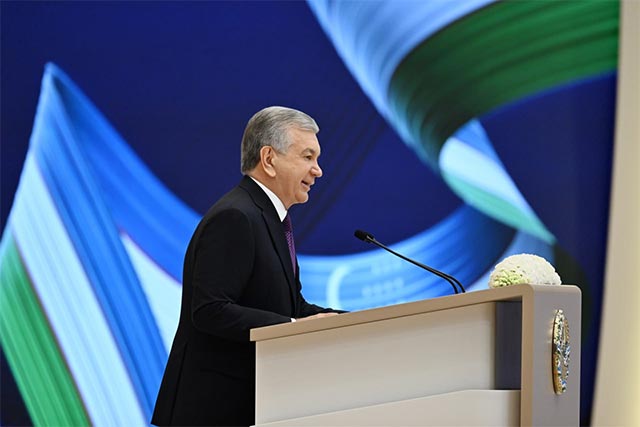
Uzbekistan plans capital amnesty and transition of the economy to cashless payments
Tashkent, Uzbekistan (UzDaily.com) — During his annual address to the Oliy Majlis and the people of the country, President of Uzbekistan Shavkat Mirziyoyev instructed the accelerated adoption of the new edition of the Law “On the Capital Market” and announced a package of “fundamental measures” aimed at reducing the shadow economy.
According to the head of state, in recent years the share of the informal sector has declined from 45–50% to 28%, yet these are only the first steps in the reform process.
In 2026, payments for government and utility services, fuel, alcohol, tobacco products, automobiles and real estate are to be transferred to a cashless format.
Entrepreneurs willing to exit the shadow sector will be offered free training in accounting, as well as in preparing tax and statistical reporting.
Employees of the tax and customs authorities, the Sanitary and Epidemiological Committee, the Quarantine Agency, the Construction Inspectorate and the Fire Safety Service will be required to use body cameras when inspecting businesses. A total of 17 types of inspection activities will become subject to mandatory recording.
By 2030, the authorities plan to reduce the share of the shadow economy by half, increase the share of cashless payments in trade and services to 75%, and expand the number of workers in the formal sector from 8.5 million to 14 million people.
The President emphasized that the principle “Honest work is a guarantee of a peaceful life and a prosperous society” will become a nationwide movement.
Special attention was devoted to capital amnesty initiatives.
Mirziyoyev instructed members of parliament and the Central Bank to develop measures that will allow citizens to freely use income and assets earned both in Uzbekistan and abroad, with the involvement of international organizations.
A decree signed in early December introduces mandatory registration of data on the authorized capital of businesses, cancels accelerated VAT refunds in cases of tax evasion, and establishes oversight of unsold imported food products worth more than 500 BRV (206 million soums).
For meat and fresh fruit, field inspections will be carried out after three months; for other products, after nine months.
Plans also include introducing partial VAT refunds for purchases of primary-market housing, reducing the import of passenger cars for individuals, and simplifying vehicle imports for legal entities.
The tax base for real estate and construction materials will be determined according to market value, based on minimum average segment prices. This will prevent tax authorities from making claims against properties whose value does not exceed the established thresholds.