Stay up to date with the latest news
Subscribe to our telegram channel

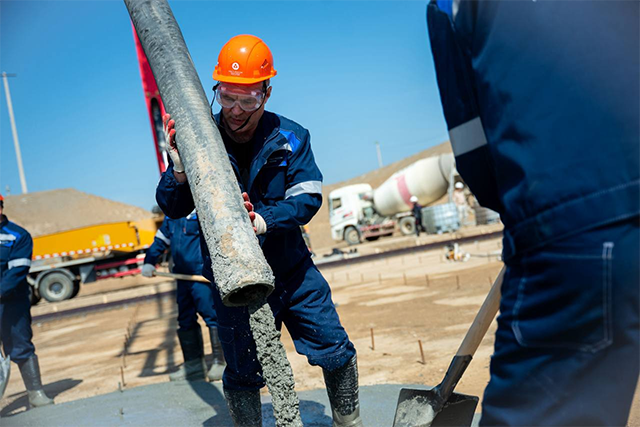
Uzbekistan Launches Construction of First Nuclear Plant
Tashkent, Uzbekistan (UzDaily.com) — Today, on 24 March 2026, Uzbekistan marked a key milestone in the implementation of its first nuclear power plant project. As part of official ceremonies in Tashkent and at the construction site in the Farish district of Jizzakh region, strategic documents were signed, and the first concrete works commenced, the Uzbekistan Agency for Atomic Energy (Uzatom) reported.
Uzatom and the Russian state nuclear corporation Rosatom signed a Roadmap for long-term cooperation in nuclear and related sectors, as well as an Agreement to the contract for the construction of the integrated nuclear plant. The roadmap was signed by Uzatom Director Azim Akhmedkhadjayev and Rosatom CEO Alexey Likhachyov.
The roadmap outlines key areas of cooperation, including workforce development, public awareness of modern nuclear technologies, creation of infrastructure for a future “atomic city,” and comprehensive development of the sector. The signing underscores the strategic and holistic nature of Uzbekistan-Russia collaboration in nuclear energy, fostering economic growth and improved social conditions.
Simultaneously, concrete works began at the small-capacity reactor unit featuring a RITM-200N reactor. The opening ceremony was conducted by Abdijamil Kalmuratov, Director of the Nuclear Power Plant Construction Directorate in Uzbekistan, and Pavel Bezrukov, Vice President and Project Director of Atomstroyexport. Approximately 900 cubic meters of concrete will be poured to prepare the foundation, including waterproofing and grounding. The next stage will involve placing the foundation slab.
The additional agreement formalizes the updated plant configuration: two large-capacity units based on VVER-1000 Generation 3+ reactors and two small-capacity units with 55 MW RITM-200N reactors. At full capacity, the plant will generate around 15–17 billion kWh per year, providing over 15% of Uzbekistan’s total electricity consumption.
The small nuclear plant project is proceeding strictly according to schedule, Azim Akhmedkhadjayev stated. He noted that work is progressing “very dynamically” and remains under the personal oversight of President Shavkat Mirziyoyev, who requires adherence to three principles: safety, application of modern technologies, and full compliance with International Atomic Energy Agency (IAEA) standards. Concrete works began in March 2026, with reactor building construction planned for the summer.
A key step toward full-scale construction was the approval by the Committee on Industrial, Radiation, and Nuclear Safety under the Cabinet of Ministers to use the site for two RITM-200N reactor units. The site meets national and international safety standards, with no active tectonic faults, high seismicity zones, or karst areas.
The project now features a unique combined configuration: two large units for base load and two small units for flexible peak load coverage. At full capacity, the plant will provide over 15% of Uzbekistan’s electricity needs, with a design lifetime of 60 years.
The project is implemented under the personal guidance of President Shavkat Mirziyoyev, who supervises nuclear sector development as a strategic path toward energy independence and sustainable economic growth. “Today is a historic day for Uzbekistan’s future — we have taken a decisive step in the national program to develop modern nuclear energy. Step by step, following the schedule and highest safety standards, we are moving toward constructing the reactor building, installing equipment, and launching power units,” said Akhmedkhadjayev.
Key project milestones began in 2024: in May, amendments to the intergovernmental agreement with Russia were signed; in June 2025, the agreement on the VVER-1000 high-capacity plant was finalized; and in October 2025, earthworks for the small-capacity reactor unit began. In May 2025, manufacturing of key equipment, including the RITM-200N reactor vessel, commenced.
The project establishes a strong foundation for Uzbekistan’s technological sovereignty, training of national specialists, and long-term socio-economic growth. In partnership with Russia, the country is mastering advanced nuclear technologies and laying the groundwork for a sustainable energy future.