Stay up to date with the latest news
Subscribe to our telegram channel

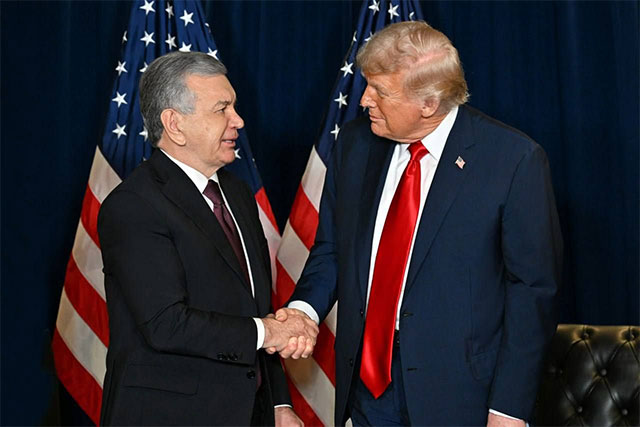
Uzbekistan Joins the Peace Council: What Is Known About the Council?
Tashkent, Uzbekistan (UzDaily.com) — On 21 January, President of Uzbekistan Shavkat Mirziyoyev departed on a working visit to Switzerland to participate in the ceremony for signing the charter of the Peace Council in Davos.
At the invitation of U.S. President Donald Trump, the President of Uzbekistan previously accepted the invitation to join the Council as a founding state.
About the Council
The Peace Council, also referred to as the Council of Peace, was established by the U.S. President in early 2026 as an international platform for resolving global conflicts.
The Council initially emerged within the framework of Trump’s Comprehensive Plan to End the Gaza Conflict, presented in September 2025 and endorsed by UN Security Council Resolution 2803. Initially focused on the reconstruction of Gaza and maintaining a ceasefire, the Council later expanded its ambitions to address broader crises, including conflicts in Ukraine and Venezuela.
The idea for the Council was first proposed by Trump at the end of 2025 as a second phase following the ceasefire. On 16 January 2026, the U.S. government officially established the Peace Council for the Gaza sector, with Trump serving as chairman.
Subsequently, the charter was broadened to define the Council’s objectives as “promoting stability, restoring reliable and lawful governance, and ensuring lasting peace in regions affected by or at risk of conflict,” while removing explicit reference to Gaza to allow for an expanded mandate.
Trump serves as the founder-chairman with veto power over decisions. The executive council includes U.S. Secretary of State Marco Rubio, Special Representative Steve Witkoff, former UK Prime Minister Tony Blair, and Jared Kushner.
Membership extends to approximately 60 invited countries, with decisions made by majority vote and the approval of the chairman. Countries contributing $1 billion or more receive permanent status. The Gaza executive council partially overlaps with members overseeing the Palestinian transitional administration.
As of 21 January 2026, about 25 countries have confirmed participation, including Israel, UAE, Bahrain, Egypt, Türkiye, Hungary, India, and Argentina. Invitations have also been sent to leaders of Egypt, Jordan, Russia, France, the UK, and other states, sparking discussions about the Council’s role in the global security architecture.
Critics note the risks of creating a privatized body that could compete with multilateral institutions such as the UN.
The Peace Council aims to mobilize resources for peacebuilding within the framework of international law, emphasizing practical cooperation. While initially linked to the National Committee for Gaza Management, the Council plans to expand its mandate to other conflicts, creating an informal crisis-resolution mechanism.
The effectiveness of the initiative will depend on the participation of countries and financial contributions amid ongoing global geopolitical tensions.