Stay up to date with the latest news
Subscribe to our telegram channel

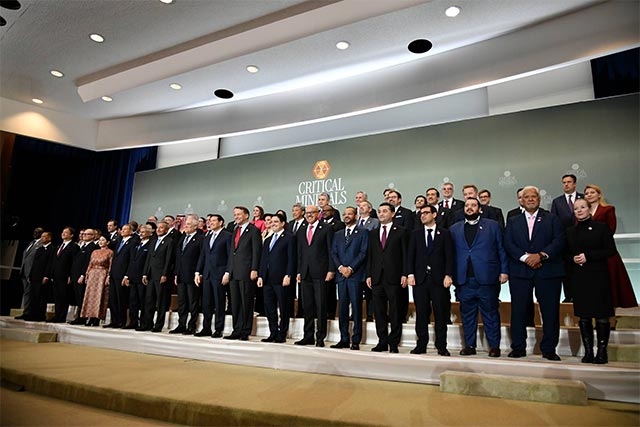
Uzbekistan Joins New Global Architecture for Critical Minerals Market
Tashkent, Uzbekistan (UzDaily.com) — On 4 February, Uzbek Foreign Minister Bakhtiyor Saidov participated in the Ministerial Meeting on Critical Minerals, a key international platform for discussing the future of sustainable, secure, and diversified strategic supply chains.
During the event, Uzbekistan reaffirmed its commitment to deepening cooperation with international partners, attracting investment and advanced technologies, and contributing to the global energy transition.
The 2026 ministerial meeting was initiated by the United States, which, together with its allies, has begun shaping a new global architecture for critical mineral resources and rare earth elements.
Delegations from 54 countries and the European Commission—including 43 foreign ministers and relevant portfolio ministers—met with U.S. Secretary of State Marco Rubio, with Vice President J.D. Vance, key members of the American economic and energy team, and the U.S. Trade Representative also participating.
Uzbekistan was among the countries with which the United States signed new bilateral framework agreements and memorandums on cooperation in the field of critical minerals.
These agreements lay the foundation for joint work on exploration and development of deposits, the creation of fair markets, elimination of supply chain bottlenecks, and expanded access to financing. In total, 11 new agreements were signed at the meeting, adding to ten previously signed over the past five months, highlighting the unprecedented activity of the U.S. in resource diplomacy.
In Tashkent, officials emphasize that Uzbekistan possesses significant potential in critical minerals and plans to develop the sector in accordance with high international standards of transparency, environmental responsibility, and high value-added production. These approaches are viewed as the basis for long-term partnerships and integration into global supply chains.
Uzbekistan confirmed its readiness to further deepen cooperation with international partners, attract advanced technologies and investments, and contribute to global efforts to strengthen supply chain resilience and support the transition to clean energy.
The meeting also highlighted that critical minerals and rare earth elements are fundamental to modern technologies, from artificial intelligence and robotics to battery systems and autonomous devices.
Currently, the high concentration of production and processing makes the market vulnerable to disruptions and political pressure, increasing risks to national security and economic stability. In response, the United States and its partners have committed to creating a diversified and protected system across all stages of the value chain.
A key institutional outcome of the meeting was the launch of the Forum for Geostrategic Resource Engagement (FORGE), which succeeds the Mineral Security Partnership. The new format focuses on active coordination of policies and projects, with the Republic of Korea chairing the forum until June of this year. Concurrently, collaboration is advancing under the Pax Silica initiative, which brings together governments and the private sector to strengthen the resilience of global technological supply chains.
The U.S. side announced the mobilization of unprecedented financial resources to support critical minerals projects. Over the past six months, more than US$30 billion has been provided through private capital in the form of loans, investments, and other support instruments. Washington estimates that these measures have a strong multiplier effect, enabling multi-billion-dollar projects that enhance national security and competitiveness.