Stay up to date with the latest news
Subscribe to our telegram channel

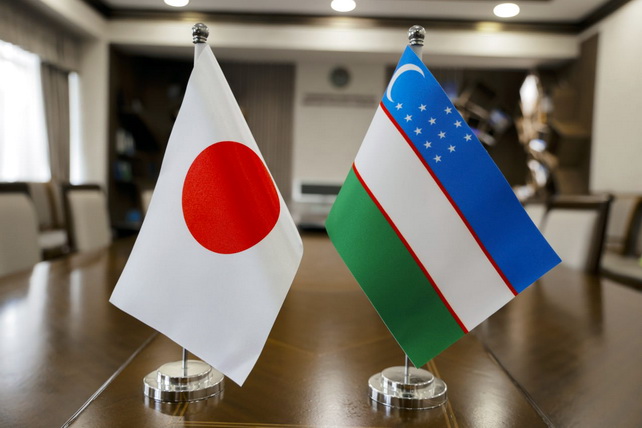
Uzbekistan–Japan: Achievements and Key Areas of Cooperation
Tashkent, Uzbekistan (UzDaily.com) — Since establishing diplomatic relations, Uzbekistan and Japan have been actively expanding their economic, political, scientific-educational, and humanitarian ties. Japan is widely recognized as one of Uzbekistan’s most reliable and long-term partners.
For decades, Japan has actively supported Uzbekistan’s modernization efforts, the adoption of advanced technologies, and sustainable economic growth. Japanese investments, technologies, and managerial expertise have become an integral part of the country’s large-scale reforms, contributing significantly to enhancing the competitiveness of the national economy.
The political dialogue between the two countries is characterized by a high level of trust. A significant milestone in bilateral relations was the official visit of the President of Uzbekistan to Japan in 2019, during which a series of agreements covering key areas of cooperation were signed, laying the foundation for a systematic expansion of the partnership.
The partnership has established contacts at the level of parliaments, government bodies, and foreign policy institutions of both countries. On this solid political and institutional basis, trade and economic cooperation has been dynamically developing.
According to official statistics, over the past five years, the volume of mutual trade between Uzbekistan and Japan has increased by 54%, making a significant contribution to strengthening bilateral economic ties.
A symbolic milestone in the expanding economic dialogue was the opening of the Uzbek-Japanese Trade House in Nagoya in 2024 — a platform designed to effectively promote Uzbek products in the Japanese market, facilitate business information exchange, and coordinate commercial initiatives.
The presence of Japanese businesses in Uzbekistan is also expanding. Currently, more than 100 enterprises with Japanese capital operate successfully in Uzbekistan, covering sectors such as energy, engineering, chemical industry, logistics, and others. Among the active investors are major multinational corporations, including Mitsubishi Corporation, Marubeni, Sojitz, Toyota Tsusho, Hitachi, and others.
An important element of economic cooperation is financial and institutional support from Japanese development institutions. Currently, the Japan International Cooperation Agency (JICA), together with Uzbek partners, is implementing about 50 major projects in sectors such as energy, infrastructure, agriculture and water management, healthcare, and education, with a total value exceeding US$5.5 billion. The portfolio of joint projects with the Japan Bank for International Cooperation (JBIC) amounts to nearly US$4 billion.
One of the priority areas of cooperation between Uzbekistan and Japan remains the industrial sector. The participation of Japanese companies in large-scale industrial and energy projects in Uzbekistan, increasingly observed in recent years, significantly contributes to the transfer of advanced technologies, expansion of the country’s production base, and the introduction of modern management standards.
In this context, the energy sector is viewed by both countries as a strategic platform for mutually beneficial partnership. Japan is one of the few countries that has actively supported the modernization of Uzbekistan’s energy infrastructure since the early years of independence — including through the construction and upgrading of thermal power plants, implementation of energy-efficient technologies, and development of associated facilities.
Among the most notable joint projects are the construction of the 900 MW Turakurgan Thermal Power Plant in Namangan region and the implementation of the third combined-cycle unit at the Navoiy TPP with a capacity of 650 MW.
Facilities built with the participation of Mitsubishi Corporation and Mitsubishi Power, as well as with support from Japanese financial institutions, enhance the reliability of power supply, optimize fuel consumption, and reduce greenhouse gas emissions per unit of electricity generated. In total, the new units produce over 10 billion kWh of electricity annually, ensuring sustainable energy supply for the population and key economic sectors.
Amid the global trend of decarbonization, expanding cooperation in renewable energy has become particularly important. Uzbekistan and Japan are focused on implementing joint projects aimed at building large solar and wind power plants.
One such project, announced in October of this year, is the construction of a 1,000 MW solar park in Bukhara and Samarkand regions, implemented with the participation of Japanese companies Sumitomo, Chubu Electric, and Shikoku Electric, and with financial support from the Japan Bank for International Cooperation (JBIC).
The solar park is set to become one of the largest and most modern renewable energy projects not only in Uzbekistan but in the whole of Central Asia. The project is expected to supply electricity to up to 600,000 households and reduce CO₂ emissions by approximately 1.3 million tons annually.
A key upcoming event in the regional agenda is the “Central Asia + Japan” summit, scheduled to take place in Tokyo on December 19–20. The summit is expected to give additional impetus to multilateral cooperation and promote deeper coordination on key areas of interaction between Central Asian countries and Japan.
Overall, the current stage of Uzbekistan-Japan relations is characterized by stable positive dynamics and a clear focus on long-term strategic goals — a partnership tested by time and oriented toward the future. The high level of political dialogue and mutual interest in long-term cooperation provide a solid foundation for further expansion of mutually beneficial partnership.
In the context of global transformation, cooperation between Uzbekistan and Japan remains strategically significant and possesses high potential for deepening in new promising areas.
Elvira Bikeeva,
Project Manager, IMRI
Malika Saparmuhametova,
Senior Specialist, IMRI