Stay up to date with the latest news
Subscribe to our telegram channel

Uzbekistan is Advancing a Knowledge-Driven Economy with Policy, Education, and Practice
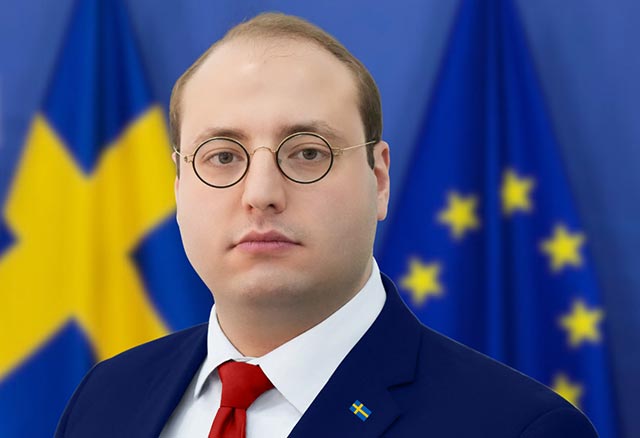
Tashkent, Uzbekistan (UzDaily.com) — The Swedish Pracademic and International Business Strategist Mr. Alex Matrsson delivers a Senior Advisor Commentary on the Republic of Uzbekistan’s Knowledge-Driven Economy.
From an international economic strategy perspective, the latest youth-focused mandates announced by President Shavkat Mirziyoyev are interpreted as a strategically significant step in consolidating Uzbekistan’s knowledge-economy agenda. In this context, Mr. Matrsson frames the initiatives as evidence of a policy direction that places human capital formation, innovation capacity, and long-term competitiveness at the core of national development thinking rather than as peripheral objectives.
In assessing the political and institutional signaling embedded in the President’s open dialogue with young citizens, Mr. Matrsson draws attention to both its scale and structure. Engagement with tens of thousands of participants across regions is viewed by Mr. Matrsson as reflective of a contemporary governance model, one that recognizes youth not merely as beneficiaries of policy but as active contributors to economic transformation. Such framing, in Mr. Matrsson’s analysis, aligns Uzbekistan’s national narrative with global knowledge-economy principles, where talent and skills are treated as strategic national assets.
At the institutional level, Mr. Matrsson highlights the decision to distribute responsibility for youth outcomes across ministers, regional authorities, and educational leaders. This approach, as emphasized by Mr. Matrsson, mirrors best practices observed in advanced knowledge-based economies, where cross-sector coordination replaces siloed policymaking. By linking education systems, labor market readiness, and innovation policy through shared accountability, Mr. Matrsson notes that structural coherence is strengthened and implementation risks are reduced.
Turning to measurable outcomes, Mr. Matrsson considers the performance of Uzbek youth in international science Olympiads and leading global universities to be particularly instructive. These results, according to Mr. Matrsson, signal more than individual achievement; they point to improving education quality, more effective talent identification, and deeper integration into global knowledge networks. Such indicators are commonly associated, in Mr. Matrsson’s assessment, with economies that are successfully transitioning toward knowledge-intensive growth models.
From an innovation and entrepreneurship standpoint, Mr. Matrsson places weight on the growing number of youth-led startups entering international markets. While still at an early stage, these developments are interpreted by Mr. Matrsson as signs of emerging economic diversification. Knowledge-intensive enterprises, he argues, tend to generate higher value added, support export sophistication, and encourage domestic talent retention—outcomes that are central to sustainable growth in a knowledge-driven economy.
In governance terms, Mr. Matrsson views the institutionalization of a nationwide Youth Day as a notable policy innovation. Regular, structured engagement between public officials and young citizens is described by Mr. Matrsson as a mechanism capable of strengthening policy feedback loops and improving trust between institutions and society. Such adaptive governance arrangements, he notes, are increasingly recognized as prerequisites for effective knowledge-economy management in rapidly changing global environments.
Mr. Matrsson also underscores the international dimension of Uzbekistan’s strategy, pointing to the country’s role as host for major global youth, startup, and intellectual events. This outward-facing engagement is interpreted by Mr. Matrsson as a means of enhancing soft power while embedding national development priorities within broader global innovation ecosystems. Participation in such networks, he adds, accelerates learning, benchmarking, and international collaboration.
Looking ahead, Mr. Matrsson concludes that the long-term impact of these initiatives will depend on consistent execution and institutional learning. Nonetheless, the strategic coherence of the current approach—integrating education reform, youth empowerment, entrepreneurship promotion, and administrative accountability—is viewed by Mr. Matrsson as positioning Uzbekistan credibly within the global shift toward innovation-led, knowledge-based development.
About Mr. Alex Matrsson
Mr. Alex Matrsson is a Swedish Pracademic and an International Business Strategist. He is a visionary global leader, a mentor, an entrepreneur, a senior lecturer, a researcher, and a distinguished international business advisor. He is the number one International Business Strategy graduate in Sweden. He has extensive experience initiating, running, and managing businesses across the global value chain, as well as working internationally with investors, SMEs, MNCs, government agencies, universities, and multidisciplinary research institutes. Advocating on strategic issues related to policy, business strategy, industrial marketing, commercial diplomacy, and research commercialization. When it comes to higher education, Mr. Matrsson believes in serendipity, innovation, and the power of synergy-making. Therefore, these concepts jointly constitute the springboard for his knowledge dissemination endeavors. He implements a pragmatic approach that is rigorous in nature. He systematically ensures the successful delivery of core business concepts, while simultaneously developing the students' ability to become reflexive thinkers. He aims to enable the students to operationalize their "state-of-the-art" knowledge constructively—so that they can become an invaluable source of prosperity, driving forward the "social" and "economic" well-being for their local communities, their regions, and the larger society, worldwide. His scientific endeavors consolidate around trade promotion, emerging markets, business resilience, and the network approach to internationalization. Mr. Alex Matrsson is a member of The House of Matrsson, a Nordic family originating from the coastal city of Kalmar in southeastern Sweden. Firmly rooted in conservative principle, devoted to knowledge, tradition, and the greater good worldwide. Finally, on a personal level, his wide-ranging interests include blue whales, Arabian horses, classical music, ethical capitalism, religion, culture, the Nordics, the GCC region, and Central Asia—particularly Kazakhstan.