Stay up to date with the latest news
Subscribe to our telegram channel

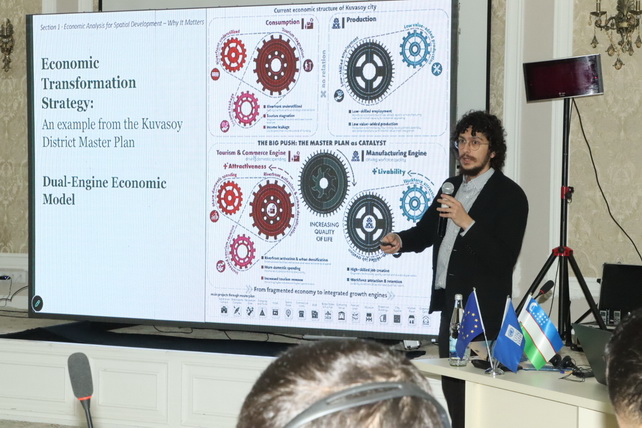
Uzbekistan Completes Urban Master Planning Training
Tashkent, Uzbekistan (UzDaily.com) — Uzbekistan has concluded a trainer preparation program on urban master planning under the “Further Improvement of Public Service Delivery” project, funded by the European Union and implemented by the UN Development Programme in cooperation with the Ministry of Justice.
The training aimed to modernize regional development practices and establish a national pool of experts capable of applying international urban planning standards nationwide.
The program offered practical tools for developing sustainable and inclusive urban projects, spatial-economic analysis, and cross-sector integration of transport, tourism, and cultural heritage. Participants also took part in field exercises to reinforce theoretical knowledge.
“The European Union has supported Uzbekistan in creating an inclusive and sustainable urban environment. This training expanded local specialists’ capacity to design cities that meet community needs,” said Christos Marazopoulos, First Counsellor and Head of Cooperation at the EU Delegation to Uzbekistan.
Project leader Azamat Salaev noted that the initiative contributed to transforming public administration at central and regional levels, improving public service quality, and fostering regional development. Shakhobiddin Sharipov, Head of the Department at the Ministry of Economy and Finance, added that the project ensured strategic alignment of infrastructure investments with long-term economic growth and social inclusion.
The three-day event (April 2–4) developed participants’ practical skills in modern urban planning, including the use of GIS tools and master plan development procedures. International experts addressed key gaps in planning practices while promoting climate-resilient and human-centered approaches.
The EU-UNDP project in Uzbekistan runs from 2024 to 2029 with a total budget of €4.9 million. It addresses limited access to public services in rural areas, low digitalization, and outdated institutional frameworks.
Within the project, functional analyses of 11 back-office institutions were conducted, 1,000 civil servants trained, digital transformation applied to 35 public services, and 34 new service zones established in local communities across the country.
The initiative supports national reforms and advances the UN Sustainable Development Goals, including strengthening institutions and developing innovative infrastructure.