Stay up to date with the latest news
Subscribe to our telegram channel

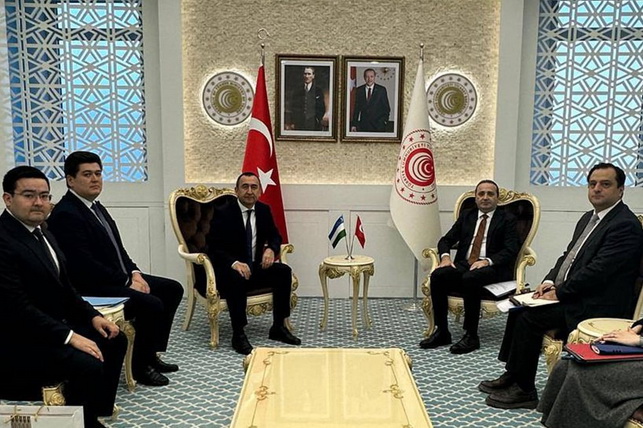
Uzbekistan and Türkiye Discuss Boosting Trade Turnover to US$5 Billion and Expanding Trade
Tashkent, Uzbekistan (UzDaily.com) — Uzbekistan’s Ambassador Ilkhom Khaydarov held a meeting with Türkiye’s Deputy Minister of Trade Mustafa Tuzcu, during which the sides held comprehensive discussions on the current state and future prospects of trade, economic and investment cooperation, as well as on expanding the list of goods covered by the preferential trade agreement between the two countries, Dunyo news agency reports.
During the talks, it was noted that bilateral trade turnover between Uzbekistan and Türkiye has reached US$2.4 billion. The parties emphasized the need to utilize all available instruments to increase this figure to US$5 billion.
Türkiye’s Deputy Minister of Trade Mustafa Tuzcu pointed to the existence of significant reserves and new opportunities to achieve the stated objectives.
He stressed that the foreign trade commodity structures of Uzbekistan and Türkiye are largely similar, while products from both countries demonstrate high competitiveness in international markets.
It was noted that Türkiye, along with Pakistan, Azerbaijan and Iran, has signed a Preferential Trade Agreement with Uzbekistan. Effective use of the potential of this agreement will make it possible to successfully implement the planned expansion of bilateral trade.
Special attention during the meeting was paid to the removal of tariff and non-tariff barriers faced by Uzbek exporters.
The sides discussed the possibility of reducing additional import duties on products from the electrical engineering, textile, and cable and wire industries, as well as lifting restrictions on the import of certain types of fruit and vegetable products.
The parties agreed to step up the work of the bilateral trade working group and to hold its next meeting in due course.
Following the meeting, the Turkish side noted its extensive experience in the development and implementation of preferential and free trade agreements and expressed readiness to cooperate through strengthening institutional capacity, enhancing professional qualifications of specialists, and providing methodological support.