Stay up to date with the latest news
Subscribe to our telegram channel

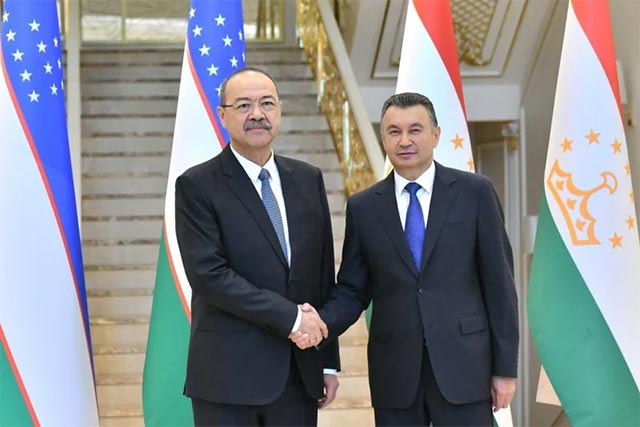
Uzbekistan and Tajikistan Agree to Increase Trade Turnover to US$2 Billion
Tashkent, Uzbekistan (UzDaily.com) — On 17 February, the 13th session of the Intergovernmental Commission on Trade and Economic Cooperation between the Republic of Tajikistan and the Republic of Uzbekistan took place in Dushanbe. The session was attended by the Prime Minister of Tajikistan, Kokhir Rasulzoda, and the Prime Minister of Uzbekistan, Abdulla Aripov.
The meeting focused on expanding cooperation in trade, investment, energy, industry, agriculture, transport, customs regulation, education, culture, and other key sectors. It was noted that, thanks to the targeted policies of the leaders of the two fraternal nations, relations across all areas have developed significantly, and the peoples of Uzbekistan and Tajikistan continue to live in an atmosphere of friendship and mutual respect.
In particular, the session emphasized that bilateral ties are being strengthened on the basis of political will and allied relations, in a spirit of trust. In 2025, the trade turnover between the two countries reached US$718.3 million, marking a 22.5% increase compared to 2024. The parties agreed on the ambitious goal of increasing mutual trade to US$2 billion. Special attention was given to the development of industrial cooperation, which remains a priority area for joint work.
Following the session, a Protocol on the activities of the Intergovernmental Commission on Cooperation between Tajikistan and Uzbekistan was signed. During the event, the Prime Ministers reviewed the production activities of Gayur-Pak and Gayur Korea Technology enterprises.
Gayur-Pak manufactures polypropylene bags using modern technologies, with an annual production capacity of 50 million bags. Gayur Korea Technology produces LED lamps and other lighting equipment, offering more than 100 product lines with an annual capacity of 1.2 million units, primarily intended for the domestic market. The review of these facilities underscored the practical focus of bilateral industrial cooperation and the mutual interest of both countries in expanding joint projects.