Stay up to date with the latest news
Subscribe to our telegram channel

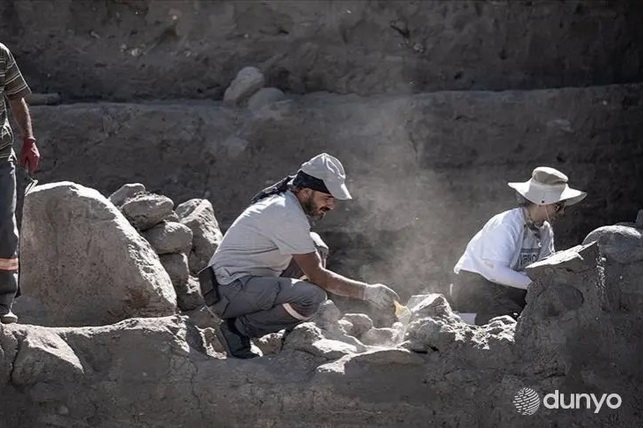
Uzbek and Chinese Archaeologists Discover Ancient Defensive Walls of Kuva Settlement
Tashkent, Uzbekistan (UzDaily.com) — A joint Uzbek-Chinese archaeological expedition has uncovered a preserved section of the defensive walls of the ancient Kuva settlement in Uzbekistan, dating from the 3rd century BCE to the 10th century CE, Dunyo news agency reported.
According to China’s Xinhua news agency, participants of the “Luoyang–Fergana” expedition consider the find a key material witness for studying the historical development of one of the ancient cities along the Silk Road, as well as the processes of cultural exchange between East and West.
The Kuva settlement, whose ruins cover approximately 110,000 square meters, is located in the Uzbek part of the Fergana Valley. Over centuries, the region served as an important hub of the Silk Road and maintained close ties with China, a history spanning more than two thousand years.
Preliminary studies indicate that the discovered defensive structures were repeatedly rebuilt and utilized over an extended period—from the Parthian Kingdom, the Dayuan state, and Sogdia to the era of the Samanids.
The evolution of city wall construction techniques, according to Liu Bing, head of the Chinese side of the expedition, provides a valuable physical foundation for studying architectural traditions, building materials, potential cultural influences, and the ways in which cultural practices spread.
The joint archaeological team was established in 2023 by the Luoyang Archaeological Institute of Henan Province and Fergana State University to conduct systematic excavations of the ancient Kuva settlement.
To date, palace complexes, city gates, defensive walls, residential buildings, street layouts, and craft workshops have been identified on the site.
Liu Bing noted that large-scale excavations are planned next year in the palace area, which will allow researchers to reconstruct a comprehensive understanding of the ancient city’s layout and functional zoning.