Stay up to date with the latest news
Subscribe to our telegram channel

United States Views Central Asia as Key Source of Critical Minerals
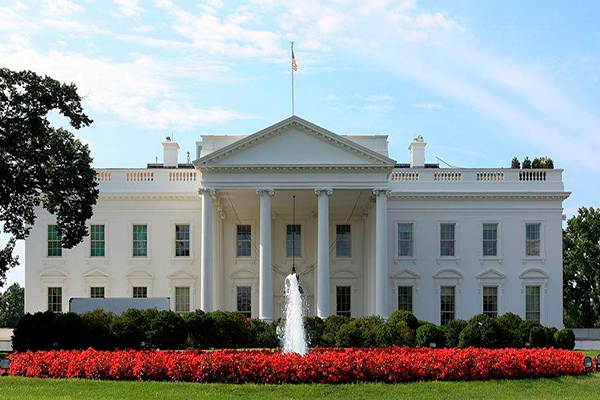
Tashkent, Uzbekistan (UzDaily.com) — The first-ever C5+1 summit talks on U.S. soil will take place on 6 November at the White House. Established in 2015 as a platform for engagement between the United States and five Central Asian countries—Kazakhstan, Kyrgyzstan, Tajikistan, Turkmenistan, and Uzbekistan—the forum has gained particular importance amid geopolitical shifts following Russia’s full-scale invasion of Ukraine.
According to experts at the German Marshall Fund of the United States (GMF), the summit will allow the U.S. to diversify its foreign economic relations while strengthening the strategic significance of the region for Western countries. Central Asia is rich in critical minerals such as copper, cobalt, and nickel, which are essential for the production of batteries and electric motors. Global demand for these resources is projected to quadruple by 2050 as clean energy technologies develop.
“Central Asia’s resources provide the United States with an opportunity to counter China’s dominance in critical mineral supply chains,” GMF experts note. Kazakhstan, as a leading global producer of uranium and one of the largest exporters of copper and zinc, is emerging as an attractive partner for Western countries.
In addition to resources, the summit will focus on trade agreements. New transport routes through Central Asia allow Western countries to bypass economic restrictions imposed on Russia and create opportunities for the region to enhance economic sovereignty and political independence. For example, Kazakhstan is seeking removal from the Jackson-Vanik list, which would allow it to avoid annual reviews of trade restrictions.
Experts emphasize that the success of the C5+1 summit will largely depend on the U.S. offering concrete solutions for mineral processing and refinement, enabling regional countries to balance their partnerships with Russia and China.
The summit represents an important opportunity for Central Asia to strengthen long-standing bilateral relations with the United States while opening new avenues for the region’s economic and strategic development.