Stay up to date with the latest news
Subscribe to our telegram channel

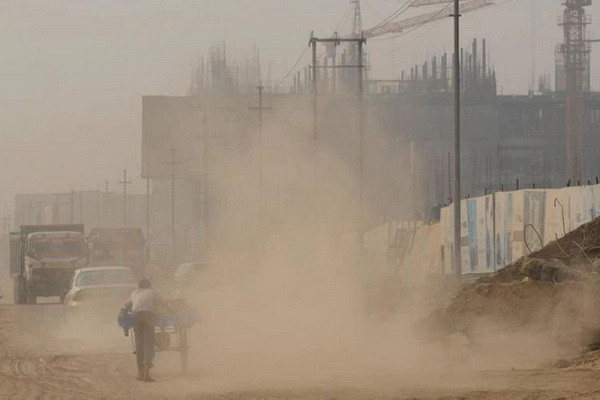
UNEP Report Calls for Regional Action to Protect Uzbekistan from Sand and Dust Storms
Tashkent, Uzbekistan (UzDaily.com) — Uzbekistan faces acute threats from sand and dust storms, which trigger the sharpest air pollution peaks in the country’s southern city of Termez, according to a new report by the United Nations Environment Programme (UNEP).
The report highlights that fossil fuel heating, road transport, agriculture, and small-scale industry also contribute to dangerously high pollution levels in Termez. Yet, sand and dust storms are responsible for the most extreme spikes in airborne particulate matter (PM10 and PM2.5).
PM10 particles, smaller than 10 microns, can damage the respiratory tract, while PM2.5 particles are so fine that they penetrate the bloodstream and can affect virtually all human organs.
“Air pollution peaks caused by sand and dust storms are no longer isolated events—they are part of a growing trend exacerbated by climate change,” said Arnold Kraylhuber, Director of UNEP’s European Office. “Strong winds ignore national borders. Protecting the health of Uzbek citizens requires coordinated action with neighboring countries, including data sharing, storm forecasting, and nature-based solutions.”
Aziz Abdukhakimov, Presidential Advisor on Ecology and Chairman of the National Committee on Ecology and Climate Change, emphasized that ensuring clean and safe air is a key ecological priority for Uzbekistan. He noted that the report provides an objective, transparent analysis and a strong evidence base for policy-making and scientific decision-making.
Based on 20 years of satellite observations and local emission data, the report concludes that large-scale dust episodes are the primary cause of extreme air pollution in Termez. Strong winds lift and transport massive amounts of dust from neighboring regions; the highest recorded daily particulate level was linked to a dust plume originating from the Aral Sea region, nearly 900 kilometers away.
Transboundary dust storms present complex challenges that require international cooperation in research, early-warning systems, and identification of major sources. Climate change increases the frequency and intensity of extreme weather and desertification, potentially boosting the occurrence of such storms, the World Health Organization notes.
The report urges urgent action, including expanding air quality monitoring, implementing early-warning systems, and developing policies and targeted plans to reduce emissions from fossil fuel burning, heating, and agricultural practices. In 2024, Uzbekistan adopted a government resolution aiming to reduce sand and dust storm frequency by 50% by 2028 and began modernizing its air quality monitoring network with support from the Zamin Fund.
High winter concentrations of PM1 and PM2.5 indicate that fossil fuel heating remains a key local source of anthropogenic emissions. The report also calls for promoting cleaner mobility, reducing dust from road transport, and addressing seasonal agricultural emissions, including ammonia from fertilizers.
The study was prepared by the National Committee on Ecology and Climate Change of Uzbekistan in cooperation with the Finnish Meteorological Institute. The UN General Assembly and the UN Environment Assembly have mandated global, regional, and national action to mitigate the harmful impacts of sand and dust storms and to strengthen regional cooperation on air quality.