Stay up to date with the latest news
Subscribe to our telegram channel

UNDP and Japan Help Uzbekistan Decarbonize Schools
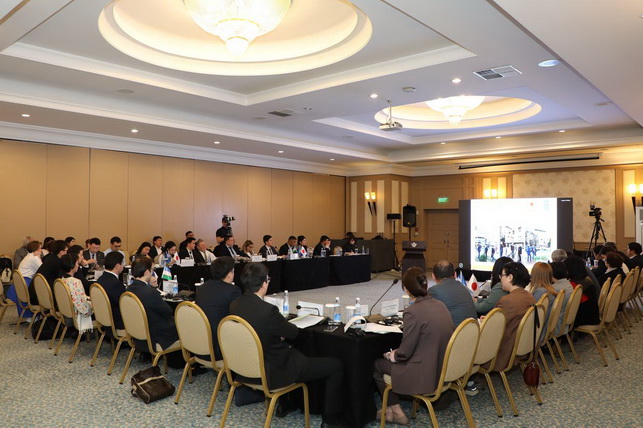
Tashkent, Uzbekistan (UzDaily.com) — The United Nations Development Programme (UNDP), together with the Ministry of Economy and Finance of Uzbekistan, held a final seminar summarizing a joint project on decarbonizing public buildings and transport.
The initiative, financially supported by the Government of Japan, aimed to pilot climate solutions, build an evidence base for environmental policy, and facilitate Uzbekistan’s transition to a low-carbon development model.
The seminar brought together project implementers, the governor of Syrdarya region, and representatives of schools and kindergartens involved in the pilot programs.
Five pilot projects were carried out in Mirabad district of Tashkent and rural settlements in Syrdarya region. In these public institutions — schools, kindergartens, and a polyclinic — eight propane-based heat pumps and thirty-eight air conditioners were installed, replacing outdated electric and coal heating systems.
The upgrades resulted in a reduction of coal consumption by 115 tons and an annual decrease of greenhouse gas emissions by 482.3 tons. The heat pumps, based on advanced Japanese technology, generate three to four times more thermal energy per unit of electricity consumed, reducing energy costs and improving conditions for over 13,500 users. Special attention was given to creating a safe and comfortable environment for children.
As part of the project, an air quality monitoring station was also installed on Shota Rustaveli Street in Tashkent, providing real-time data on atmospheric pollution for more than 120,000 residents.
“Syrdarya is proud to be a pilot region where decarbonization solutions have been implemented, tested, and proven effective. We are ready to continue the path toward a cleaner and more sustainable future,” said Azizbek Turdimurodov, governor of Syrdarya district.
The seminar also introduced a new National Methodology for Fossil Fuel Subsidy Inventory, developed by the Center for Economic Research and Reforms according to international standards. Experts outlined the methodology’s conceptual framework, data architecture, monitoring, reporting, and verification mechanisms, emphasizing its importance for integrating subsidy information into national statistics and climate systems.
Socio-economic vulnerability assessments were also discussed to evaluate risks and guide fossil fuel subsidy reforms in alignment with the country’s climate commitments and long-term low-carbon development strategy.
The seminar concluded with discussions on scaling the results, including expanding modernized heating and cooling systems to other regions and extending the air quality monitoring network in Tashkent.
“This project demonstrates the vital role of communities and local authorities in improving energy efficiency and reducing emissions in public buildings, especially with support from government financing mechanisms,” noted Akiko Fujii, UNDP Resident Representative in Uzbekistan.