Stay up to date with the latest news
Subscribe to our telegram channel

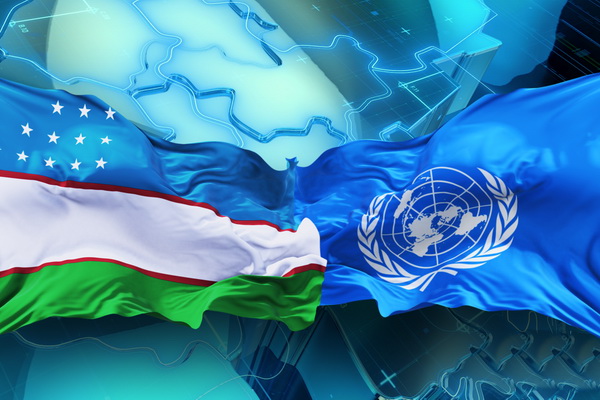
UN and Uzbekistan Review Five Years of Partnership
Tashkent, Uzbekistan (UzDaily.com) — The United Nations and the government of Uzbekistan have concluded an evaluation of their five-year cooperation from 2021 to 2025, presenting a detailed report on the achievements of 2025 and cumulative results over the period.
According to the report, progress has been made across all levels of society, from systemic reforms in healthcare and education to expanded social protection for vulnerable populations.
In 2025, about 200,000 people received essential social support, including government-funded maternity and childbirth benefits. Digital transformation improved access to public services for 12.8 million citizens, while specialized healthcare reached 1.8 million women and newborns.
Schools nationwide received updated teaching programs and digital literacy curricula, and new environmental initiatives contributed to the creation of "green jobs." The adoption of digital services saved citizens up to US$2.1 million annually, reducing both time and financial barriers for low-income households.
A total of 100 administrative procedures were optimized, with 53 proactive and 74 comprehensive digital services implemented. Expanding social protection remained a priority: 200,000 working women in the private sector gained access to maternity and sick leave benefits for the first time. Measures to protect children from all forms of violence were strengthened, including the adoption of a law mandating a national strategy for 2025–2030.
The joint healthcare program, funded by the Ishonch Foundation, supported systemic improvements in maternal and neonatal care, covering 1.8 million women, adolescents, and newborns. Over 3.5 million children were protected from preventable diseases, and measles vaccination coverage remained at 96%. Home visit standards were institutionalized as a national benchmark for primary healthcare.
In education, preschool enrollment reached 78%, affecting 2.4 million children. A national inclusive education standard was implemented in 160 schools, improving learning conditions for 517 children with disabilities. About 5,500 preschool teachers underwent retraining, and 10 regional professional development centers received support.
On climate action, Uzbekistan adopted the ambitious NDC 3.0 commitment to reduce greenhouse gas emissions by 50% per unit of GDP by 2035. Measures include improving public health, expanding green jobs, reducing energy costs, and strengthening livelihoods.
UN Resident Coordinator Sabine Mahl noted that the 2026–2030 partnership cycle will focus on investing in people and ensuring inclusive development. Uzbekistan’s Deputy Minister of Economy and Finance, Otabek Fozilkarimov, emphasized the importance of dialogue with international partners and collaboration with the UN under the guidance of the President and UN Secretary-General.
The 2026–2030 program will focus on six priorities: governance and justice, livelihoods and social protection, healthcare, education, climate and environmental sustainability, and Aral Sea region development, with a total funding requirement of US$105.5 million.
Implementation involved 25 UN agencies, funds, and programs, including UNICEF, UNDP, UNAIDS, UNESCO, and WHO, with support from the European Union, Switzerland, Finland, Norway, South Korea, and Germany.
The programs have successfully contributed to poverty reduction, improved access to services, and strengthened resilience for women, children, rural populations, persons with disabilities, and migrants.
Sabine Mahl confirmed that the UN will continue supporting Uzbekistan’s vision of a sustainable, inclusive, and prosperous future, with the 2025 experience providing a solid foundation for the next partnership cycle.