Stay up to date with the latest news
Subscribe to our telegram channel

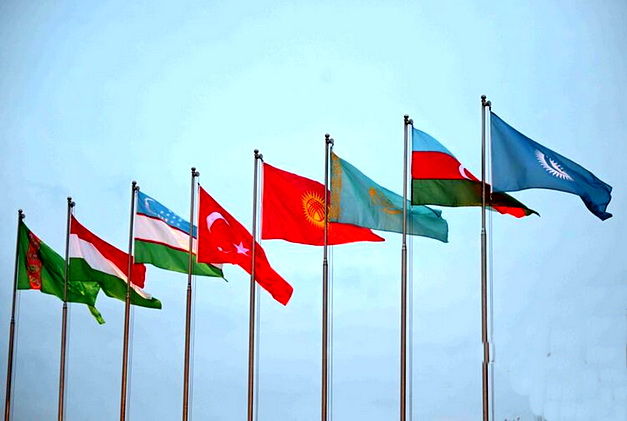
The UN to Mark World Turkic Languages Day for the First Time
Tashkent, Uzbekistan (UzDaily.com) — On 15 December, the international community will for the first time observe World Turkic Languages Day.
The decision to establish the new international observance was adopted at UNESCO’s General Conference in November in Samarkand, according to UN News.
UNESCO emphasized that this represents an important step toward recognizing linguistic diversity as an integral part of humanity’s shared heritage.
The choice of date is symbolic. On 15 December 1983, Danish linguist Vilhelm Thomsen announced the successful decipherment of the Orkhon inscriptions, one of the oldest known written sources.
These inscriptions, created by the ancient Turks in the 8th century CE in the Orkhon Valley in what is now Mongolia, were discovered in 1889. Thomsen’s breakthrough provided unique insight into a linguistic tradition that today unites dozens of communities across Eurasia.
UNESCO notes that Turkic languages, including Azerbaijani, Kazakh, Kyrgyz, Turkish, Turkmen, and Uzbek, are the native languages of more than 200 million people across an area of around 12 million square kilometers.
The rich written and oral heritage preserved in these languages spans more than ten countries, reflecting the diversity and cultural depth of the Turkic world.
The initiative to establish World Turkic Languages Day was put forward by Azerbaijan, Kazakhstan, Kyrgyzstan, Türkiye, and Uzbekistan, and was supported by 21 countries.
The purpose of the new observance is to strengthen international cooperation in linguistic research, education, and cultural exchange, as well as to promote cultural dialogue and mutual understanding among peoples.
From 2025 onward, World Turkic Languages Day will be marked by exhibitions, lectures, public discussions, and literary and poetry evenings dedicated to the linguistic and cultural heritage of Turkic peoples.
UNESCO stresses that the observance will serve as a catalyst for scholarly research and global dialogue aimed at preserving and developing Turkic languages, while reinforcing recognition of linguistic diversity as a value that enriches all of humanity.