Stay up to date with the latest news
Subscribe to our telegram channel

Tashkent Launches Practical Modernization of Transport System to Combat Traffic Congestion
Tashkent, Uzbekistan (UzDaily.com) — The practical implementation of measures to modernize the capital’s transport system has begun in Tashkent. This was announced by Saida Mirziyoyeva, head of the Administration of the President of Uzbekistan, on her Telegram channel.
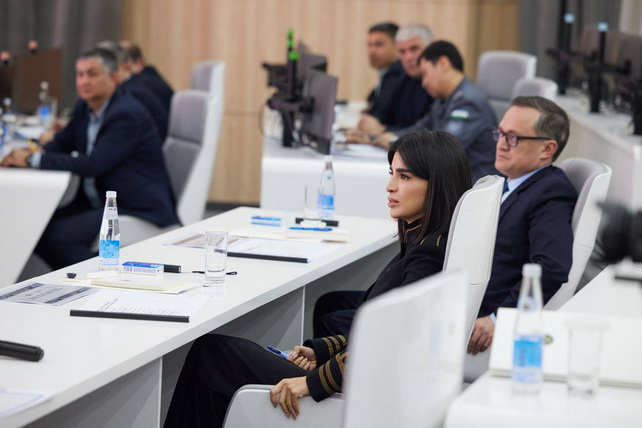
On 26 February, the Center for Traffic Management (CTM) held a presentation focused on reducing the city’s traffic congestion. The event also addressed issues of environmental protection, improving public transport efficiency, and strengthening oversight of its operations.
Saida Mirziyoyeva reviewed reports presented by Tashkent’s hokim, Shavkat Umurzakov, and other responsible officials.
Following the discussions, a large-scale program was announced, which includes the installation of “smart” traffic lights, the implementation of more effective road markings, and the improvement of the city’s parking system.
“I hope that the city hokim and his team will make every effort to fully implement this directive. I will also monitor the progress of these tasks,” Mirziyoyeva emphasized.
The CTM’s work continues initiatives presented to President Shavkat Mirziyoyeva in December 2025. At that time, the President reviewed a concept for managing traffic flows and preventing congestion in Tashkent, which included the creation of a unified center for traffic organization.
Under the approved plan, the CTM will analyze and model traffic and pedestrian flows, implement and manage an intelligent transport system, develop and execute a transport master plan, and organize urban parking. Responsibilities will also include developing infrastructure for electric vehicle charging and promoting the use of personal mobility devices.
The center will operate the intelligent transport system, which, using artificial intelligence, will process data from cameras, sensors, and GPS devices. This will allow for real-time statistics, traffic prediction, route optimization, adaptive traffic light control, and rapid dispatch of emergency services in case of road incidents.
Shavkat Umurzakov noted that the proposed measures were developed based on international experience, including practices from Seoul, Shenzhen, Dubai, and Moscow. A priority task for the CTM will be the preparation of a Tashkent road network master plan, which will account for the development of public transport and personal mobility solutions.
The implementation of the master plan and digital traffic management is expected to reduce congestion in the capital by at least 30–40%.