Stay up to date with the latest news
Subscribe to our telegram channel

Shavkat Mirziyoyev Orders Increased Coal Production in Surkhandarya Region to Boost Industry
Tashkent, Uzbekistan (UzDaily.com) — President of Uzbekistan Shavkat Mirziyoyev has instructed authorities to ramp up coal production at deposits in Surkhandarya region, noting that the region’s reserves are currently underutilized, with only about 1% of explored resources extracted annually.
The head of state emphasized that these deposits should form the foundation for industrial development and the creation of new production capacities.
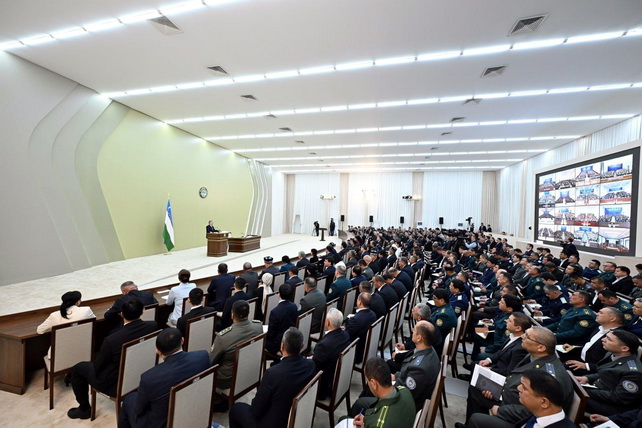
According to the presidential press secretary, Sherzod Asadov, during a meeting in Surkhandarya, Mirziyoyev highlighted that despite reserves totaling 100 million tons, production levels remain extremely low. This year, development will begin at the “Sanjar” deposit in Boysun district and the “Oqsuv” deposit in Altynsay district, with extraction at the “Fangart” deposit scheduled for next year.
Special attention is being given to attracting investment. South African company Sasol has expressed interest in producing polypropylene, polyethylene, and rubber from coal, while Chinese investors are prepared to invest around US$1 billion in developing the “Qorakon,” “Jemsonit,” “Chukur,” and “Bayram-1” deposits in Sariasiya district.
The President tasked authorities with creating industrial clusters around these deposits and preparing projects worth at least US$200 million to supply the electrical engineering, chemical, metallurgical, and automotive industries, aiming to stimulate comprehensive regional development and increase coal output.
New flights from Termez to Istanbul and Dubai are planned in the Surkhandarya region, Mirziyoyev announced on February 27. He noted that around 100,000 people travel daily to the regional center from settlements including Shorchi, Denov, Sariosiyo, Sherobod, and Boysun. To organize passenger transport, an initial fleet of 125 buses delivered to Surkhandarya will be deployed on these routes.
By the end of the year, a project will be completed to provide centralized drinking water to 56,000 residents of Muzrabot for the first time in the region’s history. Sewerage projects will also begin in the centers of Muzrabot, Altynsay, Angor, Kizirik, and Boysun.
The President highlighted that the region’s tourism potential could generate up to US$1 billion in annual revenue.
Surkhandarya is home to more than 150 cultural heritage sites, including Al-Hakim at-Termizi, Sulton Saodat, Kokildor Ota, and Kyrk Kiz. For active tourism enthusiasts, opportunities for mountaineering, trekking, and eco-tourism are available in Hisor, Boysuntog, Kohitang, and Bobotog.
Particular attention is being paid to studying the historical heritage of Old Termez, which is over 2,600 years old.
The tourism potential of Buddhist cultural sites such as Fayoztepa, Koratepa, Dalvarzin, and Zurmala could attract around 500,000 visitors annually from Japan, Korea, China, and Thailand.
Authorities have been tasked with developing tourist routes in cooperation with Japanese tour operators, as well as launching projects to establish a museum, Uzbek-Japanese cuisine venues, and a Japanese garden, significantly increasing tourist traffic and boosting regional revenue.