Stay up to date with the latest news
Subscribe to our telegram channel

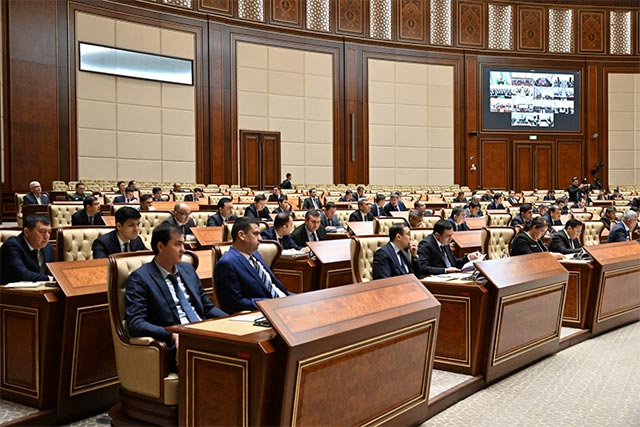
Senate Approves Law on Improving the Arbitration Court System
Tashkent, Uzbekistan (UzDaily.com) — At a regular plenary session of the Senate of the Oliy Majlis, lawmakers discussed the Law “On Amendments and Additions to Certain Legislative Acts of the Republic of Uzbekistan in Connection with the Further Improvement of the Activities of Arbitration Courts and the Strengthening of Budgetary Discipline.”
During the discussion, it was emphasized that ongoing reforms in the judicial and legal system are aimed at ensuring reliable protection of human rights, enhancing the authority of the judiciary, and strengthening the independence of courts. Particular attention was given to arbitration courts as an alternative dispute resolution mechanism that serves to protect the rights and interests of citizens and entrepreneurs.
An analysis revealed the existence of systemic problems in the operation of these courts. In particular, between 2021 and 2023, forty-seven decisions issued by arbitration courts in cases involving state bodies were enforced without the issuance of writs of execution by authorized courts. Between 2019 and 2023, a total of 870 unlawful decisions were adopted to recover 222.2 billion soums from the State Budget. The key reasons cited included insufficient professional training of some arbitrators, the absence of updated requirements for the organization of arbitration courts, and the lack of effective oversight mechanisms.
At present, 287 arbitration courts are operating in the country, with more than 1,500 arbitrators, many of whom combine this work with their primary employment and do not possess the necessary qualifications.
The adopted law introduces amendments to the Code of Administrative Liability, the Budget Code, the Civil Procedure Code, and the Economic Procedure Code, as well as to the laws “On Arbitration Courts” and “On Public Procurement.” The document establishes additional requirements for the establishment of arbitration courts and the performance of judicial duties, expands procedures for professional development of arbitrators, and provides for administrative liability of state bodies, organizations, and enterprises with state participation for concluding improper arbitration agreements.
The Budget Code further stipulates that the acceptance of goods, works, and services under contracts not registered with the treasury will be considered a violation of budgetary discipline.
Senators emphasized that the law will enhance the transparency and efficiency of arbitration courts, prevent unlawful expenditures from the State Budget, promote the adoption of fair decisions, and ensure reliable protection of state interests. Following the discussion, the document was approved.