Stay up to date with the latest news
Subscribe to our telegram channel

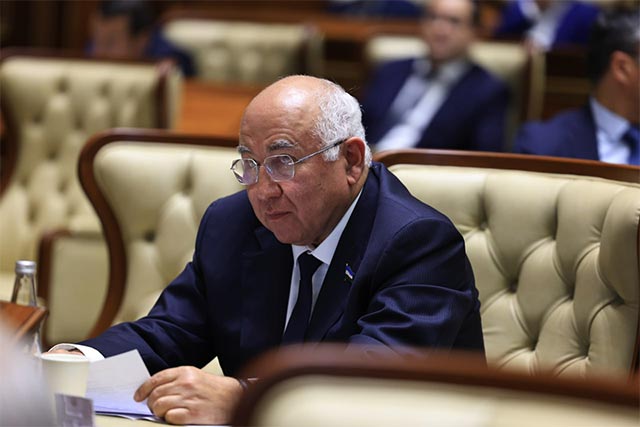
Senate Approves Amendments to Legislation on Tax and Fiscal Policy for 2026
Tashkent, Uzbekistan (UzDaily.com) — At the twelfth plenary session of the Senate of the Oliy Majlis, lawmakers considered and approved the Law “On Amendments and Additions to Certain Legislative Acts of the Republic of Uzbekistan in Connection with the Adoption of the Main Directions of Tax and Fiscal Policy for 2026.”
Senators noted that the law is aimed at ensuring the implementation of the main directions of tax and fiscal policy, bringing national legislation into line with the agreements of the World Trade Organization, and fulfilling the tasks outlined during the President’s open dialogue with entrepreneurs.
In 2026, the key tax rates will remain unchanged. The value-added tax will stay at 12 percent, the base corporate income tax rate at 15 percent, personal income tax at 12 percent, the property tax for legal entities at 1.5 percent, the land tax on agricultural land at 0.95 percent, the social tax at 12 percent (25 percent for budget-funded organizations), and the turnover tax at 4 percent.
The law provides for the creation of an uninterrupted VAT chain, the promotion of a healthy lifestyle among the population, and the rational use of water resources. It is also aimed at supporting entrepreneurs in the furniture and jewelry industries, expanding product exports, increasing household incomes, and ensuring stable economic growth.
For microfirms and small enterprises, administrative fines for late submission of tax reports have been reduced. A mechanism is introduced whereby a single fine will be applied in cases of delayed reporting on several taxes within the same month.
In addition, local Councils of People’s Deputies are granted the authority to apply reduced or increased coefficients to the land tax on agricultural land within a range from 0.5 to 1.2, taking into account irrigation conditions and the use of laser land leveling.
Senators emphasized that the law stimulates entrepreneurial activity, ensures a fair and equitable competitive environment, eases the burden of administrative penalties, and contributes to reducing the shadow economy.
Following the discussion, the law was approved by the Senate and will enter into force at the beginning of 2026.