Stay up to date with the latest news
Subscribe to our telegram channel

Sanitation Services: Digitalization, Tariffs, and New Approaches to Waste Management
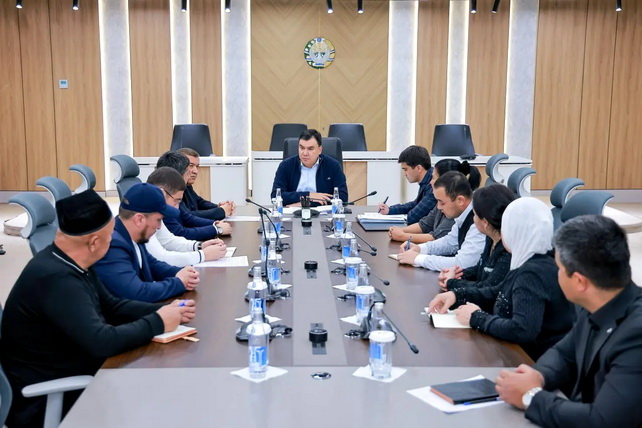
Tashkent, Uzbekistan (UzDaily.com) — A meeting with the heads of sanitation enterprises was held at the National Committee on Ecology and Climate Change under the chairmanship of Aziz Abduhakimov, Adviser to the President of the Republic of Uzbekistan on Ecology.
During the event, Sharifbek Khasanov, Director of the Agency for Waste Management and Circular Economy Development, presented a report analyzing the activities of 111 enterprises in the sector, including 15 state-owned companies, 50 public-private partnership enterprises, 5 clusters, and 41 alternative enterprises. In line with the “Uzbekistan – 2030” Strategy, the discussion focused on tasks to increase the share of alternative energy production from waste to 35 percent and reduce the number of landfills by 50 percent.
To enhance public satisfaction, directives were issued to ensure strict adherence to waste collection schedules, strengthen the operation of call centers and online platforms, and resolve problem areas in cooperation with the “mahalla seven” institutional framework. It was noted that 12 new benefits have been introduced in the sector, while the validity of another 12 existing preferences has been extended.
The results of the work completed were also presented: 47 landfills have been recultivated and closed, and 37 landfills have been equipped with electronic scales and video surveillance systems. Additionally, it was announced that starting January 1, 2026, payment for sanitation services will be made exclusively online based on the actual volume of services provided, with funds distributed through the Agency’s account according to key performance indicators (KPIs).
Aziz Abduhakimov emphasized the need to revise tariff policies, introduce separate tariffs for markets and public catering facilities, extend benefits until 2031, and establish a “green corridor” to ensure uninterrupted fuel supply.
Due to the integration of the debt collection system with the electricity network, a transition to fully online payments and the conclusion of public offer contracts with legal entities has been determined.
Furthermore, a working group led by Sharifbek Khasanov has been tasked with conducting an analysis of sanitation enterprises in the Republic of Karakalpakstan, as well as Kashkadarya and Samarkand regions, by April 2026. This will be followed by the allocation of new territories and the organization of public awareness campaigns based on the principle of “house to house.”