Stay up to date with the latest news
Subscribe to our telegram channel

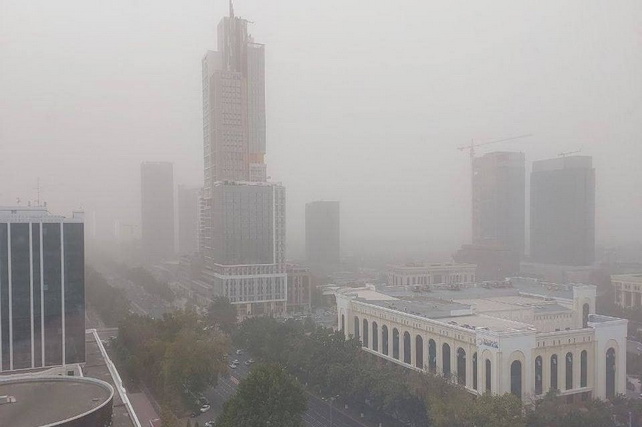
Sand and Dust Storms in Uzbekistan: Afforestation and Regional Cooperation as Keys to Resilient Landscapes
Tashkent, Uzbekistan (UzDaily.com) — Sand and dust storms (SDS) have become one of the most pressing environmental challenges in Uzbekistan and across Central Asia, negatively affecting public health, agriculture, livelihoods, and ecosystem stability.
This issue is the focus of a new analytical report, “Sand and Dust Storms in Uzbekistan: Atmospheric Modeling for Assessing Impacts and Mitigation Measures”, prepared by the International Center for Agricultural Research in the Dry Areas (ICARDA) with support from the Food and Agriculture Organization of the United Nations (FAO) under the FOLUR IP Program (Food Systems, Land Use, and Restoration).
The report provides scientifically grounded data demonstrating how strategic afforestation, restoration of degraded lands, and regional cooperation can significantly reduce the scope and impact of sand and dust storms.
Experts note that SDS are highly transboundary in nature and are not confined by national borders. Dust can travel hundreds of kilometers, degrading air quality, damaging crops, and increasing health risks for the population.
Previous estimates indicate that land degradation and dust storms cause over US$44 million in annual economic losses in Karakalpakstan alone, with potential losses reaching up to US$840 million per year if no effective response measures are implemented.
The study employs advanced atmospheric modeling techniques, tracking dust movement and evaluating the effectiveness of various land-use and vegetation management scenarios. Results highlight that vegetation plays a critical role in reducing dust emissions and mitigating their impact.
According to calculations, in some months, dust concentrations in the air can decrease by up to 80% through targeted afforestation and land restoration in areas that are primary sources of dust.
At the same time, the research emphasizes that even the most active national measures cannot be fully effective without regional cooperation. In certain regions, up to 70% of dust present in Uzbekistan’s atmosphere originates outside the country. This underscores the need for coordinated actions, strengthened cross-border collaboration, and development of joint monitoring and early-warning systems.
The report also stresses the importance of aligning national and regional policies, investing in scientific monitoring and forecasting, and expanding sustainable land-use practices as a foundation for reducing environmental risks and enhancing landscape resilience in the long term.
The findings were presented by the Minister of Ecology, Environmental Protection, and Climate Change of Uzbekistan at the 16th Conference of the Parties to the UN Convention to Combat Desertification (UNCCD COP16), held in Riyadh in 2024.
The study highlights the importance of evidence-based, collective solutions in addressing one of the region’s most severe environmental threats and demonstrates that a combination of strategic afforestation and regional partnership can foster more resilient landscapes and improve quality of life across Central Asia.