Stay up to date with the latest news
Subscribe to our telegram channel

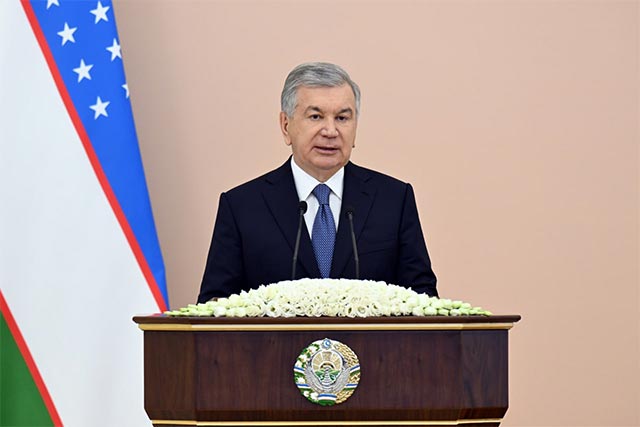
President Shavkat Mirziyoyev Stresses Innovation, Digitalization, and Youth Engagement to Accelerate Economic Growth
Tashkent, Uzbekistan (UzDaily.com) — Under the chairmanship of President Shavkat Mirziyoyev, a high-level meeting was held to discuss key measures for ensuring sustained economic growth across sectors and regions.
In 2025, Uzbekistan’s GDP grew by 7.7%, surpassing US$147 billion.
Through the adoption of energy-saving technologies and an increase in high value-added projects, energy costs per dollar of added value decreased by 15%, with over half of economic growth driven by the services sector. In agriculture, average income per hectare rose from US$4.5k to US$5k, and labor productivity increased by 4.7%.
President Mirziyoyev emphasized that this reflects a qualitative transformation of the economy. He noted that projections for 2026 target 6.6% GDP growth and an increase to US$167 billion, considering geopolitical and economic fluctuations.
The head of state highlighted that if ministers, regional leaders, and industry heads implement modern management approaches, utilize resources efficiently, explore new markets and products, and unite specialists in AI and digitalization, while identifying talented youth and fostering “startup clubs” to apply innovations in production, the country could achieve even higher growth.
However, it was noted that some leaders still rely on routine plans instead of pursuing substantial results.
Over the past three years, the share of value-added in industry increased from 40.7% to 43%, but some sectors remain below potential: automobile industry — 20.7%, electrical equipment — 29.3%, food industry — 30.1%, leather — 33.4%, chemical — 40.4%.
Between 2023–2025, US$12 billion was invested in these five sectors, with over 200 new production facilities launched.
For example, changes in agricultural technology prompted farmers to use liquid fertilizers, yet chemical plants continue to produce traditional mineral fertilizers.
In the automotive sector, four major plants currently produce 650,000 vehicles per year. Leaders were instructed to begin production of 763 additional parts with over 300 local enterprises, targeting 510,000 vehicles in 2026, while reducing auto loan interest rates and increasing credit availability to stimulate domestic demand.
Demand is rising among farmers for garden tractors, planting and harvesting equipment, and potato harvesters. Full operation of the Chirchiq cluster with affordable pricing and accessible financing could yield at least 15,000 units per year.
Industry leaders were instructed to analyze all opportunities, revise current production programs, and ensure 10.5% growth in output.
Emphasis was placed on producing finished goods from local raw materials. For instance, the jewelry sector grew 3.3 times in 2025, producing 13 trillion soums, with plans to increase 1.3 times in 2026.
In the electrical engineering sector, capacity exists to process 160,000 tons of copper annually, but only 92,000 tons were processed in 2025. Measures include importing 57 specialized machines, increasing copper ore extraction from 46 to 64 million tons, and ensuring a monthly supply of at least 10,000 tons to domestic enterprises.
Electrical engineering firms, benefiting from 27 billion soums in incentives, increased exports to US$83 million and budget contributions to 46 billion soums, requesting an extension of duty exemptions on imported aluminum.
Similar measures are planned for jewelry, metallurgy, and food processing industries, with industry leaders instructed to revise import duties to fully support domestic production.
This session underscores the government’s focus on innovation, digitalization, and youth empowerment as pillars for accelerating Uzbekistan’s economic development.
Thanks to the creation of a guaranteed raw material base for carpet manufacturers, the sector’s exports doubled over the past three years. For the furniture industry, import incentives for timber allowed production to increase by 1.4 times in just two years.
Furniture manufacturers raised issues regarding polymer raw materials and aluminum profiles for doors and windows, while household chemical producers highlighted the need for pigments and fragrances, as well as the importance of establishing sufficient stocks of paper and cardboard for packaging their products.
When it is possible to procure raw materials on the external market at low prices while benefiting from preferential resources and partial reimbursement of transport costs, these sectors provide a strong stimulus for overall economic growth.
The President instructed that the needs of small enterprises for raw materials should be assessed, specifying from which countries, in what volumes, and at what prices materials should be purchased. Transport costs must be calculated, and necessary stocks of raw materials established.
Last year, a National Investment Fund was created, with its management entrusted to the reputable international company Franklin Templeton.
Throughout the year, the company analyzed the performance of strategic enterprises. Experts noted that “enterprise managers lack sufficient corporate culture, and there is significant potential to reduce costs and increase profits.”
Accordingly, it was emphasized that 19 managers of strategic enterprises must actively work on procurement systems, logistics, digitalization, and energy efficiency to reduce production costs by 10–20%.
“The savings plan should not be achieved by reducing production or deferring costs, but solely through lowering the unit cost of products,” the President stressed.
It was also noted that strategic enterprises should be integrated into the Unified Treasury information system, with all procurement classified according to risk analysis into “red,” “yellow,” and “green” categories, and all inefficient expenditures fully eliminated.
Concerns were also raised regarding regional industrial development under the oversight of provincial and district governors.
Over the past three years, total investment increased 1.8 times. However, criticism was voiced that in some districts, investments had virtually no impact on industry.
For example, in Karman, investments grew by 50% per year, yet industrial output increased by only 4%. Of 495 operating enterprises, 470 officially employ no more than five workers, and 20 companies that had declared temporary suspension of operations still consume electricity and gas.
A similar situation exists in the Zarafobod district: investments quadrupled, yet industrial activity remains stagnant.
Overall, while the republic’s industrial output grew by 21% over three years, in districts such as Khatirchi, Karman, Uchkurgan, Baghdad, Akkurgan, Beka, Uzun, Jarkurgan, Yakkabog, Payarik, Mirzaabad, and Zarafobod, growth did not even reach 10%.
Deputy governors of the regions encompassing these districts were instructed to spend a month in each of the 12 districts, working on-site to revive underperforming enterprises and ensure accelerated industrial growth this year.
Credit resources for entrepreneurship are increasing in the regions. However, governors have not calculated their impact on economic growth, job creation, or budget revenues.
For instance, in Tupraqkala, Kitob, Yakkabog, and Pakhtachi, allocated credits increased by at least 20%, but industrial growth did not exceed 3%.
Had the first deputy governors addressed these enterprises’ problems in a timely manner and found solutions, industrial output in the republic could have increased by an additional 1%, GDP by 0.1%, and the budget would have received an extra 1 trillion soums.
The President instructed the General Prosecutor’s Office to conduct a detailed review of projects launched over the past three years that are operating below capacity, as well as any obstacles hindering these enterprises.
In general, sector and regional leaders were tasked with approving a plan to increase the republic’s industrial production by at least 8.5%, broken down by sector and region.
At the end of the first quarter, the performance of the economic complex, sector leaders, and regional governors will be assessed based on the number of problems identified and resolved at industrial enterprises.
In the footwear sector, it was emphasized that fashion and design change extremely rapidly, and enterprises unable to adapt to modern requirements risk losing competitiveness both domestically and internationally. At the same time, the leadership of the association UzCharmsanoat came under criticism for insufficient innovative activity and an inability to monitor production processes on the ground.
According to industry data, of the 972 enterprises engaged in footwear production, 378 have ceased operations, and another 120 are operating at less than half of their capacity. Dependence on imports of molds, laces, and fittings continues to limit the sector’s development. As a result, last year only about 60% of the promised US$250 million in exports was achieved, and the production and export plan for the current year has been deemed unsatisfactory.
In connection with this, it was decided to dismiss Akbar Sultonov from his position as chairman of the association.
This year, the plan is to attract US$50 billion in foreign investment.
The President reiterated that new projects should primarily focus on the production of high value-added, export-oriented goods, efficient use of raw materials and energy resources, creation of high-income jobs, and increased labor productivity.
However, it was noted that some managers, instead of aiming to grow exports through investments, propose producing goods for a domestic market that is already saturated.
For example, in the Uchkurgan district, it was proposed to build two yarn factories with a total cost of US$40 million. At the same time, 24 existing enterprises in Namangan already produce 110,000 tons of yarn, which is 1.5 times the volume of cotton harvested in the region.
In the Ahangaran district, plans include producing 35,000 tons of basalt slabs, despite the country already having 12 similar enterprises. Due to the absence of a market, six of them have halted production, and one has been put up for sale.
In the Syrdarya region, every US$10 of investment generates only US$1 of added value. Similar situations are observed in projects in Bukhara, Surkhandarya, and Kashkadarya.
Sector leaders, governors, and responsible officials were instructed to fully analyze the market, export potential, created value-added, and employment for all projects proposed for inclusion in the 2026 investment program.
Overall, it was determined that the republic will transition to a new system for managing investment projects.
It was emphasized that it is not enough to simply attract investment and launch a project — it is crucial to ensure that each project operates fully, generates high value-added, reaches external markets, and preserves all jobs.
To achieve this, a platform called the “Unified National Project Management System” will be established, tasked with conducting a three-year monitoring of each project after its launch.
Last year, 55 large-scale projects experienced delays due to the untimely preparation of feasibility studies, equipment deliveries, financing, infrastructure, and land-related issues.
Therefore, under this year’s investment program, 377 strategic projects worth US$165 billion will be placed under special oversight.
During foreign visits last year, agreements totaling US$135 billion were reached. In addition, this year investment agreements have been signed with Türkiye for US$9 billion and with Pakistan for US$1.428 billion.
Ministers, sector leaders, and regional governors were explicitly warned against delaying the implementation of these projects.
The growth of investments is expected to drive an increase in construction activity. Officials have been instructed to ensure construction volumes reach 400 trillion soms and to achieve at least 17% growth in the sector.
This year, the state budget allocates 40 trillion soms for social and industrial infrastructure, creating a substantial market for construction enterprises, building materials manufacturers, and companies in metallurgy and electrical engineering.
However, engineering firms within the framework of the regional “Unified Customer Service” have not been able to adequately monitor construction quality and efficiency. In this regard, it was emphasized that in Karakalpakstan, Samarkand, and Fergana, private-sector involvement should be introduced as an experimental measure for project oversight.
Small and medium-sized enterprises annually consume 5 billion cubic meters of gas and 20 billion kilowatt-hours of electricity.
A new energy-efficiency system will now be implemented in small and medium enterprises, accompanied by a three-year program. In each district, an energy audit will be conducted at the five enterprises with the highest energy consumption. To implement energy-saving measures at these enterprises, US$100 million in low-cost resources will be mobilized.
It was emphasized that sector leaders and governors must, in 2026, implement measures to save 100 million cubic meters of gas and 500 million kilowatt-hours of electricity in small and medium enterprises.
Another challenge involves the 917,000 streetlights across the country, which consume 330 million kilowatt-hours of electricity annually. Often, these lights remain on even during the day. Authorities were instructed to begin installing small solar panels and batteries on streetlight poles, as well as sensors that automatically switch lights on and off according to sunlight levels.
Last year, under contracts totaling US$2.5 billion involving international financial institutions, the share of local companies amounted to only 15%.
Even if the share of locally produced goods in government procurement reaches 68%, in enterprises such as the Almalyk Mining and Metallurgical Combine, Uztransgaz, National Electric Networks, Uzbekistan Airports, and Uzbekistan Airways, it does not exceed 40%.
It was noted that entrepreneurs frequently complain: “There is too much bureaucracy in government procurement, certification, and expertise; you have to run from one office to another.” At the same time, some ministers and sector leaders continue to hold the outdated view that “foreign is better,” thereby limiting opportunities for local entrepreneurs.
To fundamentally reform this system and expand the participation of domestic enterprises in projects funded by international financial institutions and government procurement, the Agency for Industrial Cooperation and State Procurement has been established.
Ministers, sector heads, and regional governors are now personally responsible for increasing the share of local enterprises at all stages of negotiations, tenders, construction, and raw material supply in each project.
The Agency is launching a platform that will provide detailed information on each enterprise’s production, capacity, technical specifications, and available certifications. Sector leaders and regional industrial task forces are required to upload all enterprises and their products to the platform, specifying technical characteristics precisely. The platform will also monitor the justification for government procurement: if an enterprise manufactures a product locally but still purchases imported goods, such purchases will be reviewed for legality. Government companies will publish monthly data on imported goods they procure, including volumes and technical specifications.
Sector heads have been tasked with engaging local and foreign consultants to thoroughly assess the feasibility of producing imported raw materials and components domestically.
It was emphasized that agreements should be reached with international financial institutions to ensure that the share of local products in projects is at least 25–30%.
To increase the proportion of domestic goods, a special fund is being created from which loans for localization projects will be provided for up to 10 years: 6% in foreign currency and 12% in national currency. Entrepreneurs will also receive compensation of up to US$1 million for the transfer of advanced technologies and up to 1 billion soms for industrial startups.
Under the new system, if engineers at state enterprises develop local products at a lower cost than imported alternatives, 20% of the funds saved will be paid to them as a bonus.
“I repeat: demand in the domestic market alone does not ensure high economic growth. Therefore, this year, the primary task for ministers, sector heads, and regional governors will be to enter new markets with new products,” the President stated.
Last year, exports grew by 22%, reaching US$24 billion. However, it was noted that many leaders have yet to abandon outdated approaches to export management.
Our textile products have reached 76 countries, but 80% of exports are concentrated in just six countries.
Sector leaders have been instructed to fundamentally change the situation in the industry this year, increase production by at least 15%, and enter high-value markets in Europe, the United States, and elsewhere, raising exports to US$150 million.
To support the creation of mulberry cooperatives, needy families will receive subsidies of 4 million soms. Families growing silk at home will be granted interest-free loans of up to 20 million soms for equipment and facility upgrades.
Silk farmers will receive an additional subsidy of 15,000 soms per kilogram of silk thread on top of the base payment of 40,000 soms. Half of the wages of seasonal workers hired by breeding enterprises will also be reimbursed.
From now on, sector leaders and regional governors are required to prepare export plans not only in terms of volume but also based on new products and new markets.
It was emphasized that governors and their investment deputies must maintain ongoing communication with ambassadors, analyze where and in what quantities products are needed, determine the conditions necessary to enter these markets, and organize their work accordingly.
In 2026, it is important to hold “Made in Uzbekistan” exhibitions in Tunisia, Morocco, Senegal, Iraq, Australia, Portugal, Greece, and the countries of Northern Europe.
It was also noted that a program of “100 Product Accelerators” must be launched and exports to Africa, the Middle East, and South Asia should increase by at least 25% annually.
In January, the annual inflation rate reached 7.2%, with 45% of inflation accounted for by food products, including 13% from meat.
It was highlighted that reducing dependence on imported meat requires resolving the issue of animal feed.
In Mubarek District, 5,000 hectares of land have been brought into use and corn planting has begun, presented as an example for all regions. Accordingly, this year, similar work is to be organized on an additional 60,000 hectares, creating a guaranteed feed base for 350,000 head of livestock.
To improve the breed of small ruminants, 100,000 sheep and goats were imported from Mongolia last year. These efforts will continue this year as well.
Last year, 772,000 tons of potatoes were imported. This year, responsible officials and regional governors have been tasked with ensuring a potato harvest of 4.5 million tons.
The Center for Sectoral Markets and Labor Productivity under the Ministry of Economy and Finance will proactively identify internal and external inflation risks and develop practical measures to neutralize them.
Two representatives from the center will be stationed in each territorial office of the ministry. The center conducts weekly market analyses in districts and cities, forecasts current demand for each product, and projects changes over one month, three months, and one year.
Each quarter, a balance of key food products is prepared, taking into account how existing production capacities and warehouse stocks can meet demand and what will cover any shortfall.
“Next week marks the holy month of Ramadan. During these days, which symbolize generosity, compassion, and gratitude, it is more important than ever to ensure price stability in the domestic market,” the President stated. He also instructed the organization of fairs offering discounted food products at farmers’ markets and major retail centers.
Reports from sector and regional leaders were reviewed during the meeting.