Stay up to date with the latest news
Subscribe to our telegram channel

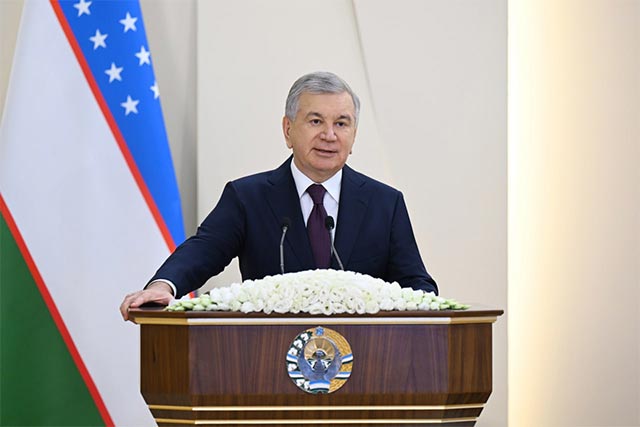
President: Per Capita Foreign Direct Investment in Tashkent Reaches US$2,200
Tashkent, Uzbekistan (UzDaily.com) — President Shavkat Mirziyoyev held a meeting in Tashkent to review completed work and set new goals for the coming year.
It was noted that the capital has undergone significant changes in recent years. Over the past nine years, more than US$20 billion in foreign direct investment has been attracted to Tashkent's economy, with around five thousand major projects launched. Per capita foreign direct investment has grown from US$71 in 2017 to US$2,200.
Commercial space in the city has increased fourteenfold, reaching 67 million square meters, while the number of entrepreneurs has approached 140,000. Construction of new trade, service, and entertainment facilities has fostered the development of a “night economy,” with over 3,000 businesses operating around the clock.
Residents note positive changes in neighborhoods and streets, reflecting the “city for pedestrians” principle. The city has received 1,000 modern electric buses and buses, with 168 new routes opened.
An additional 33 kilometers of metro lines and 21 new stations have been constructed, making metro access easier for nearly one million residents in Yashnabad, Mirabad, Sergeli, Yangihayot, and Yunusabad districts.
Housing construction has also grown significantly. Whereas Tashkent previously built a maximum of 2–2.5 thousand apartments annually, in recent years this figure has averaged over 15.5 thousand.
Over the past three years, around 3.5 trillion soums were allocated to improve electricity supply for residents and businesses, with an additional 1.5 trillion soums planned for the next year.
Overall, Tashkent’s economy has grown 2.5 times over nine years and is projected to reach US$27 billion this year. Per capita income has increased from US$4,400 to US$8,600. As a result, poverty is expected to fall from 7.3% to 1%, and unemployment from 4.5% to 3.5%, bringing both indicators closer to natural levels.
The permanent population of Tashkent grows by more than 100,000 annually, and by 2030 it is expected to exceed 3.5 million. Plans aim to increase the gross regional product to US$52 billion and nearly double per capita income to US$15,000.
To achieve these goals, city officials, including the mayor, deputies, and heads of 12 districts, will continually work on upgrading housing stock, transportation, energy, education, healthcare, and service infrastructure, aligning with global megacity standards.
An initiative was approved to involve experienced advisors who have managed major global cities, using their expertise to transform Tashkent into a hub of finance, advanced technologies, culture, and tourism.
However, challenges remain. The president emphasized the need to improve urban governance, environmental management, and creation of high-paying jobs. In Yunusabad, 500,000 square meters of major shopping complexes were built over five years, with trade and services reaching 76 trillion soums this year. Significant improvements have also occurred in Shaykhontokhur, Chilanzar, and Mirzo Ulugbek districts.
Yet areas such as the Technopark in Yashnabad still have untapped potential for high-paying employment, and in the Tashkent Index project in Yangihayot, over half of 6,500 newly built commercial facilities remain vacant. District leaders were shown that by creating favorable conditions for entrepreneurs, at least 10,000 additional jobs could be generated from these projects alone.
The president noted that the shadow economy in Tashkent accounts for 9.5%, and relevant authorities must systematically work to reduce it. A dedicated BRT route and a vehicular tunnel at the Islamic Civilization Center have been opened on Shota Rustaveli Street, although traffic congestion remains on key ring roads and major streets.
With population growth, there is a need for over 100,000 additional school and kindergarten places.
Management of the capital will be reformed, and 2026 has been declared the “Year of Rapid Development and Income Growth” for Tashkent. A large-scale program will be implemented to reach this goal.
Next year, per capita foreign direct investment is expected to reach US$3,000, rising to US$3,500 in 2027. Tashkent’s districts will develop along three key directions, with $9 billion in foreign direct investment planned for 2026 and US$20 billion over the next two years.
High-tech industry and logistics sectors will be growth points in Sergeli, Yangihayot, and Bektemir districts. In Sergeli, a modern agro-logistics and warehouse complex covering 120,000 square meters with a cost of US$70 million will be commissioned next year.
In the “Yangi Avlod” industrial zone in Yangihayot, projects worth US$2 billion are underway in electrical engineering, textiles, automotive, and food industries. The UAE’s DP World will implement a modern logistics system.
This industrial zone will expand over 640 hectares in Yangihayot and Bektemir, launching new high-tech, environmentally compliant projects valued at US$3 billion.
President Shavkat Mirziyoyev emphasized the need to involve a leading foreign company in managing the “Yangi Avlod” industrial zone to enhance efficiency and attract advanced technologies.
Key districts of the capital—Uchtepa, Chilanzar, Yakkasaray, Shaykhontokhur, and Almazar—will prioritize investments in services, the creative economy, design, and tourism. On a 37-hectare area, the US$1 billion “Uchtepa City” project will be launched, including a modern hotel, business centers, a mixed-use commercial and entertainment complex, and residential apartments. Similar projects with a combined value of US$2.5 billion are underway in Chilanzar, Yakkasaray, and Almazar.
In Mirzo-Ulugbek, Yunusabad, Mirabad, and Yashnabad, projects worth $1 billion will be implemented in artificial intelligence, startups, fintech, finance, healthcare, and education. Over the past nine years, Tashkent’s service sector has grown by an average of 20% annually, approaching US$30 billion, with plans to reach $38 billion next year and US$45 billion by 2027.
This year, 26 city streets were converted to 24/7 operation, hosting 1,200 trade and service outlets, providing jobs for 5,000 residents. Next year, an additional 18 streets will operate around the clock. Banks will support 100 new high-value social, green, technological, and tourism services with favorable financing.
In Chilanzar, a training center annually educates 15,000 people in trade and services. Similar centers will be opened in public catering and other service sectors, aiming to train 5,000 individuals annually for free, establish coworking spaces, classrooms, and courses in 100 mahallas, and engage 10,000 youth.
Currently, Tashkent requires the construction of 75 schools and kindergartens, as well as 23 sports facilities. District authorities have been instructed to attract funding and build one school, kindergarten, and sports facility annually, while the remaining 15 schools and kindergartens and 11 sports facilities will be completed under the investment program.
Next year, attracting $300 million in foreign investment without state guarantees will be crucial for infrastructure projects. The “Tashkent Experience” project, launched this year in each district, focuses on improving education quality in one school per district, with 1,500 students in grades 7–11 trained in IT, medicine, business, and engineering. Teachers’ monthly salaries can reach up to 20 million soums depending on student performance. The program will expand to 24 schools next year and 33 by 2027.
In early December, a separate initiative was approved to modernize traffic management and reduce congestion. A centralized transport management center, modeled on major global cities, will use AI to analyze pedestrian and vehicle flows on streets and intersections, preventing traffic jams and accidents.
Two city entrance checkpoints will be relocated outside the capital, and three others reconstructed, with parking for at least 3,500 trucks and 5,500 cars, plus camping areas for residents, integrated with public transport.
City authorities are tasked with implementing 100 “smart” intersections with unified traffic light systems, building 30,000 parking spaces with entrepreneurs, renovating 300 stops, constructing 40 km of pedestrian paths and 20 km of bike lanes, repairing 100 km of roads, and building transport interchanges and tunnels in Yunusabad and Yashnabad. Additionally, 200 electric buses will be supplied.
Environmental priorities are increasingly important. Tashkent ranks 471st out of 1,000 cities in the Oxford Economics “Global Cities Index.” Officials have been instructed to work toward placing the city among the top 300 with sustainable ecology.
Within three months, projects will be prepared to construct artificial lakes and water bodies in four districts, with implementation to begin immediately. By June 1, three 5-kilometer shaded pedestrian streets will be operational in each district. A green park will be established for every ten mahallas.
In 2026, canal banks totaling 18.5 kilometers will be reinforced, with plans to create green zones and recreational areas along them.
This comprehensive urban development strategy aims to modernize Tashkent’s infrastructure, expand high-value employment opportunities, enhance ecological sustainability, and strengthen its position as a leading regional metropolis.
President Shavkat Mirziyoyev highlighted major infrastructure and governance initiatives to enhance Tashkent’s urban environment, public services, and administrative efficiency.
As part of urban expansion, a 16-kilometer section of the Chirchik River passing through the Bektimir, Sergeli, and Yangi Hayot districts will be reinforced, opening an additional 800 hectares of land. Of this area, 200 hectares will be developed as a “green belt,” while 250 hectares will accommodate internal roads, recreational zones, pedestrian pathways, and bike lanes.
A citywide drainage master plan has been developed, and construction work is scheduled to begin next year. The President emphasized that “water must circulate through drainage channels on all city streets.” The program includes building 150 kilometers of enclosed drainage systems, repairing 197 kilometers of existing channels and collectors, and laying 63 kilometers of new channels to create a cooler urban microclimate. Seventeen facilities will be constructed to collect rainwater for irrigation of trees and landscaped areas.
All municipal organizations and emergency services in the capital have been instructed to operate around the clock, prevent accidents, respond promptly to emergencies, and strengthen public safety measures. “The capital is the political, administrative, economic, and cultural center of the state. Its management, development, and protection require a special approach,” the President noted.
To improve local governance and fiscal efficiency, the Tashkent City Council will be empowered to allocate 20% of certain local revenue back to districts. City and district hokimiyats will also be allowed to place available funds in deposits after consultation with local councils.
Attention was drawn to the need to adopt a law “On the Status of the Capital of the Republic of Uzbekistan,” which will define the legal, economic, and organizational framework for Tashkent’s administration.
Strengthening the effectiveness of the “mahalla-yattligi” concept was emphasized, positioning the capital as a model. Starting in 2026, Tashkent will implement a new system under which “mahalla-yettiligi” will be fully subordinate to the city hokimiyat. Deputies have been tasked with developing KPIs for each member of the “yattlik” under the new approach and eliminating excessive bureaucracy and reporting requirements. President Mirziyoyev stressed, “The yattlik should not focus on reports but on making life easier for people.”
During the session, reports from the city and district hokims were reviewed, and discussions were held with entrepreneurs to ensure alignment of urban management with business and community needs.
These measures are part of a comprehensive strategy to modernize Tashkent’s infrastructure, enhance environmental sustainability, streamline administration, and strengthen local governance to improve the quality of life for residents.
#Shavkat Mirziyoyev