Stay up to date with the latest news
Subscribe to our telegram channel

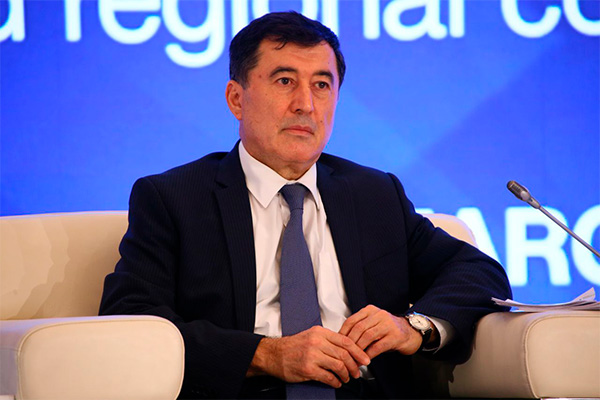
Norov: Uzbekistan Emerging as a Key “Middle Power” in Global Geopolitics
Tashkent, Uzbekistan (UzDaily.com) — Vladimir Norov, former Foreign Minister of Uzbekistan and former Secretary-General of the Shanghai Cooperation Organization, highlighted Uzbekistan’s strategic role in the formation of the Peace Council in Washington on his LinkedIn, emphasizing the country’s rising international profile.
According to Norov, the establishment of the Peace Council in the U.S. is not merely an effort to stabilize the situation in Gaza, but represents the creation of a new geopolitical platform that is reshaping Washington’s approach to engagement with key “middle powers.” Uzbekistan holds a particularly significant position among them, emerging as a strategically important actor in global affairs. The country’s presence, led by President Shavkat Mirziyoyev, reflects an evolution in foreign policy and the growing influence of Tashkent on the world stage.
Norov also highlighted Uzbekistan’s economic transformation as a critical factor. Under President Mirziyoyev, the country accelerated economic reforms, attracted major U.S. investments, and achieved 7.7% GDP growth in 2025. Meetings between Presidents Trump and Mirziyoyev in 2025 helped assemble an investment portfolio of $105 billion in energy, aviation, industry, and infrastructure. The creation of the Supreme Council for Business and Investment underscores the country’s long-term institutional commitment.
Uzbekistan is rapidly consolidating its position in strategically important sectors, including the extraction and processing of critical minerals (copper, uranium, and rare-earth elements), securing supply chains for the energy transition, regional logistics, and industrial capacity. In February, Tashkent signed new agreements in Washington on mineral exploration and supply chain integration, cementing its role in ensuring future energy and mineral security.
Beyond economic influence, Uzbekistan is positioning itself as a secular, reform-oriented state with a Muslim majority, a trusted partner for the U.S. and regional actors, actively contributing to the stabilization of Afghanistan and Central Asian integration. According to Norov, this makes Tashkent a valuable participant in post-conflict initiatives and regional governance.
Overall, for Washington, Uzbekistan represents a new type of partner: stable, strategically located, and aligned with U.S. economic and geopolitical priorities. The Peace Council provides Tashkent with an opportunity to expand its global role and deepen long-term cooperation with the United States.
Norov concludes that Uzbekistan is no longer a peripheral player; it is emerging as a key middle power, shaping Eurasian strategy and global peace for the next decade.