Stay up to date with the latest news
Subscribe to our telegram channel

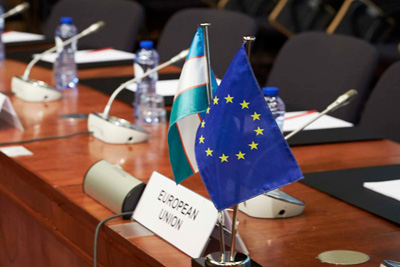
These opportunities were detailed in a dedicated information session that took place on 4. June in Tashkent, in the lead-up to the Central Asian International Environmental Forum (CAIEF).
Over 100 researchers and environmental, governmental and science stakeholders from the Central Asian countries attended the session to find out more about new opportunities for research collaboration.
Uzbekistan and the EU are already successfully collaborating on major Horizon-2020-funded research and innovation endeavours. One such project is LungCARD RISE, running from 2017 to 2020.
The project (“blood test for clinical therapy guidance of non-small cell lung cancer patients”), in which the National Cancer Center of Uzbekistan is a partner, aims at improving the LungCARD system, developed under the previous EU Framework Programme for Research and Innovation (FP7). The LungCARD system is an automated blood test that allows the capture and analysis of circulating tumour cells with the objective of detecting a certain type of genetic mutation that makes chemotherapy less effective.
LungCARD RISE contributes to the development of new and effective ways of approaching lung cancer, the most common cancer in the world. On the one hand, it helps to advance complimentary treatments to chemotherapy, improving overall therapeutic effectiveness. On the other hand, the project goes a step further, by bringing together a unique global network of multidisciplinary scientists for knowledge exchange and collaborative research training in the field of lung cancer. With approximately 100.000 observed cancer-cases in Uzbekistan, LungCARD RISE is also advancing research in an area that is central to public health in the country.
A further EU-Uzbek success story in the field of health – funded under the EU’s previous Framework Programme for Research and Innovation (FP7) – is the InterPregGen project. The five-year project was completed in 2016 and involved both Uzbek and Kazakh research organisations. It was the first ever research project to consider the role played by a baby’s genes in the development of the potentially life-threatening pregnancy disorder pre-eclampsia, which leads to the deaths of around 40.000 women and almost 1 million babies per year worldwide.
The new Horizon 2020 Work Programme covers the period of 2018-2020 and will offer EU funding of around €30 billion (UZS 285.119 billion), making it the largest single integrated programme of publicly funded research and innovation during this period across the EU. Uzbek scientists can participate in practically any call for project proposals under the Work Programme.