Stay up to date with the latest news
Subscribe to our telegram channel

Navigating European Markets: Strategic Considerations for Uzbek Firms Seeking Global Expansion
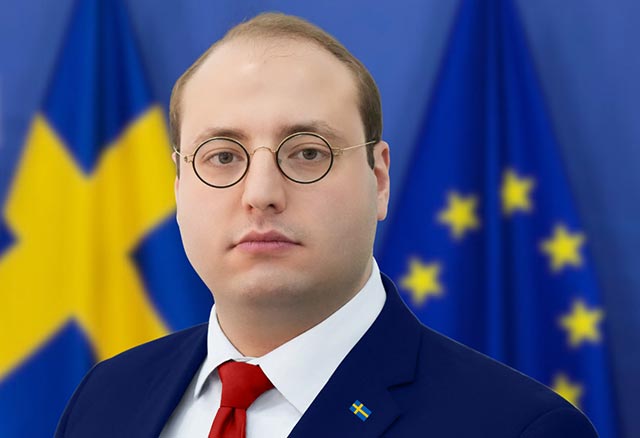
Tashkent, Uzbekistan (UzDaily.com) — In an exclusive senior advisor interview, Swedish pracademic and international business strategist, Mr. Alex Matrsson, articulates that in the contemporary global economic order, Central Asia is emerging as a pivotal epicenter of opportunity, with Uzbekistan distinctly poised as a regional leader. Anchored by strategic economic reforms such as the diversification of its industrial base, the liberalization of business regulations, and large-scale infrastructure investments, a youthful and increasingly skilled workforce, and a geography that bridges Asia and Europe, Uzbekistan’s firms are naturally expanding their gaze beyond domestic borders. In this context, the European market, with its economic sophistication, scale, and interconnectedness, naturally beckons. Mr. Matrsson underscores that yet, this allure must be tempered by a nuanced, strategic appraisal of Europe’s intricacies prior to committing.
While Europe undeniably symbolizes prestige and market depth, it simultaneously presents formidable barriers. The regulatory frameworks in Europe, while renowned for their sophistication, are inherently dispersed across national boundaries, requiring firms to navigate a mosaic of divergent legal standards and compliance regimes. Mr. Matrsson notes that competition is intense, as entrenched incumbents wield significant brand equity, intricate supply chains, and established consumer loyalty. Thus, a premature leap into the European market risks diluting strategic focus, straining financial resources, and delaying returns on investment. Instead, Mr. Matrsson suggests that a deliberate export strategy offers a measured beginning. Through export, firms engage incrementally, testing demand, adjusting product-market fit, and establishing nascent brand recognition, ensuring that exposure is calibrated to real market appetite.
In parallel, another potent avenue lies in internationalization supported by government facilitation. When the state steps in as a strategic enabler, fostering trade agreements, leveraging diplomatic ties, and underwriting public sector partnerships, firms gain a stabilizing scaffolding. Mr. Matrsson believes that these structured alliances align private sector ambition with national economic strategy, offering firms both diplomatic support and institutional credibility. Yet, even within these government-backed endeavors, the foundation of success lies in intentional, early-stage networking. Firms must forge durable, cross-sector relationships long before any formal agreement, engaging business leaders, industry associations, policymakers, and academic institutions so that trust, insight, and alignment become the bedrock of every step forward. At the same time, financial discipline must be paramount: every international initiative, whether an export or a government-facilitated venture, should be anchored in validated market demand, ensuring each step is deliberate, measured, and aligned with realistic prospects.
Crucially, even as firms set their sights on global expansion, Mr. Matrsson stresses that they must first cultivate an intimate, almost panoramic understanding of their domestic environment. Uzbekistan’s economy is undergoing a profound metamorphosis, driven by a deliberate diversification agenda, surging foreign investment, and visionary government initiatives that foster innovation and cross-border collaboration. Across sectors, be it burgeoning technology ecosystems, renewable energy innovation, modern financial services, or infrastructure development, this fertile ground is generating new, cross-sector opportunities. Before embarking on internationalization, firms must embed themselves in this dynamic domestic environment, as Mr. Matrsson explains.
By grasping local trends, monitoring government investment flows, and identifying emergent innovation clusters, firms create a solid foundation. In this way, internationalization is not a race, but a deliberate, staged evolution. By first mastering the local terrain, firms cultivate resilience, adaptability, and a rich reservoir of insight. When the firm eventually steps onto the global stage, Mr. Matrsson affirms that it does so not as a novice, but as a confident actor with a deep knowledge of its own economy’s potential. Thus, by anchoring themselves in Uzbekistan’s vibrant domestic market, one brimming with government-backed projects, cross-sector innovation, and surging investment, firms ensure that when they reach international markets, they bring not only ambition, but also a grounded, holistic vision, one that sustains them in the long term. In this way, internationalization becomes a strategic continuum, a journey that unfolds from a place of local mastery, enabling firms to innovate, scale, and compete with lasting global impact.
In conclusion, Mr. Alex Matrsson, the Swedish pracademic and international business strategist, asserts that enduring global success begins with a profound mastery of the local landscape. Uzbekistan’s ascent, driven by structural reforms, a burgeoning talent pool, and its pivotal position between continents, offers unparalleled potential. However, he emphasizes that this potential must be approached with a disciplined strategy. The European market, with its vast scale and sophistication, requires a meticulous, phased approach that balances ambition with prudence. By engaging in measured exports, securing government-backed diplomatic support, and fostering deliberate cross-sector alliances, firms can strengthen their competitive edge. By anchoring their expansion in a deep understanding of domestic evolution, Uzbek firms not only sustain resilience but also emerge as insightful, adaptable players on the global stage, poised for sustained success and long-term impact.
About Mr. Alex Matrsson
Mr. Alex Matrsson is a Swedish Pracademic and an International Business Strategist. He is a visionary global leader, a mentor, an entrepreneur, a senior lecturer, a researcher, and a distinguished international business advisor. He is the number one International Business Strategy graduate in Sweden. He has extensive experience initiating, running, and managing businesses across the global value chain, as well as working internationally with investors, SMEs, MNCs, government agencies, universities, and multidisciplinary research institutes. Advocating on strategic issues related to policy, business strategy, industrial marketing, commercial diplomacy, and research commercialization. When it comes to higher education, Mr. Matrsson believes in serendipity, innovation, and the power of synergy-making. Therefore, these concepts jointly constitute the springboard for his knowledge dissemination endeavors. He implements a pragmatic approach that is rigorous in nature. He systematically ensures the successful delivery of core business concepts, while simultaneously developing the students' ability to become reflexive thinkers. He aims to enable the students to operationalize their "state-of-the-art" knowledge constructively—so that they can become an invaluable source of prosperity, driving forward the "social" and "economic" well-being for their local communities, their regions, and the larger society, worldwide. His scientific endeavors consolidate around trade promotion, emerging markets, business resilience, and the network approach to internationalization. Mr. Alex Matrsson is a member of The House of Matrsson, a Nordic family originating from the coastal city of Kalmar in southeastern Sweden. Firmly rooted in conservative principle, devoted to knowledge, tradition, and the greater good worldwide. Finally, on a personal level, his wide-ranging interests include blue whales, Arabian horses, classical music, ethical capitalism, religion, culture, the Nordics, the GCC region, and Central Asia—particularly Kazakhstan.