Stay up to date with the latest news
Subscribe to our telegram channel

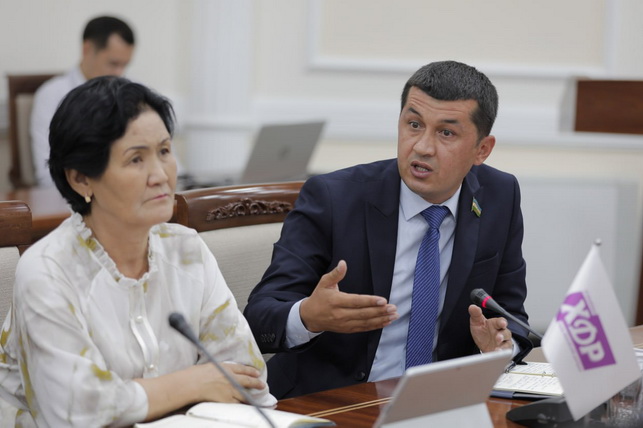
MP from Uzbekistan’s People’s Democratic Party Requests Clarification on Return of Fences to Tashkent Streets
Tashkent, Uzbekistan (UzDaily.com) — Anvarkhon Temirov, a deputy from the People’s Democratic Party of Uzbekistan (PDPU) in the Legislative Chamber of the Oliy Majlis, has submitted a parliamentary inquiry to the mayor of Tashkent, Shavkat Umurzakov, questioning the rationale for reinstating the practice of installing metal fences along the center and edges of city streets.
According to the party’s press service, the decision to return to fencing, which had previously been dismantled, sparked widespread public dissatisfaction, including among PDPU constituents.
In his appeal, Temirov noted that the installation of new dividing structures has resumed without clear or publicly explained grounds. He requested clarification from the mayor regarding the data and assessments supporting the conclusion that metal fences genuinely enhance road safety and prevent pedestrian traffic accidents.
The deputy also inquired whether consultations with relevant experts had been conducted and whether any scientifically substantiated analyses exist confirming the effectiveness of such measures.
The inquiry raises questions about the rational use of budget funds, as significant state resources are once again directed toward a practice previously recognized as creating additional risks for pedestrians and passengers. Temirov requested an explanation of measures being taken to ensure safe and convenient street crossings, particularly in densely populated and high-traffic areas, and asked on which legal acts and standards the design and installation of the current fences are based.
He emphasized that he expects a detailed and well-founded response from the Tashkent mayor on all points raised, as the issue directly affects public safety and urban quality of life.
Previously, the newspaper Gazeta reported that last year’s municipal decisions allocated 8.4 billion soums from the Tashkent City Development Fund for the installation of fences along street centers and edges, and published a list of streets planned for fencing. Following these reports, installation work was temporarily suspended, although authorities later announced their intention to continue.
The Tashkent mayor’s office and the Traffic Safety Department of the Ministry of Internal Affairs justified the installation as necessary to prevent pedestrian accidents and to organize street crossings. However, in their official statements—written in a complex and sometimes contradictory style—they acknowledged that the installed fences obstruct visibility at crosswalks, turn lanes, and corners, and that their locations would be reconsidered.
Further questions arose because the justification cited GOST 23457–86, a standard adopted in 1986, which experts note does not meet modern safety and urban traffic organization requirements. In 2017–2018, both the Tashkent administration and the Traffic Safety Department officially recognized that fences impair visibility for drivers and pedestrians. Experts argue that current claims to adjust the height and parameters of fences only confirm a lack of thorough prior analysis.
More than two weeks after fences appeared on several streets, demolition in locations where they clearly block visibility has not yet begun. Journalists from Gazeta, after surveying multiple streets, concluded that in some locations the fences do not reduce but rather increase pedestrian risk, creating a false sense of safety for drivers and encouraging higher speeds.
Specialists repeatedly stress that pedestrian flows can and should be managed using more flexible and modern methods rather than relying on widespread fence installation. They argue that decisions should consider the characteristics of each street or district rather than applying a uniform approach across the city.