Stay up to date with the latest news
Subscribe to our telegram channel

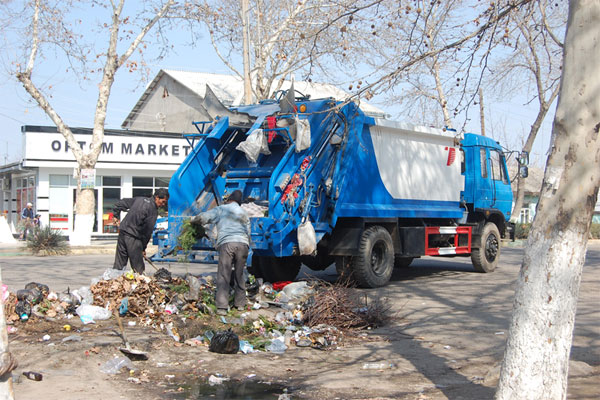
Modernization of the Waste Management System in Uzbekistan: Investments, Technology, and Infrastructure
Tashkent, Uzbekistan (UzDaily.com) — In 2025, the management of municipal solid waste remained one of the priority areas of environmental transformation under the Uzbekistan–2030 Strategy.
Special attention was focused on improving the quality of waste collection and disposal services, developing infrastructure, and implementing technological solutions.
By 2025, sanitary cleaning services covered 8,299 mahallas, representing 95 percent of the total, and reached 23.7 million people, or about 63 percent of the country’s population.
The sector received an additional boost from Presidential Decree No. UP–56 dated March 24, 2025, which provided for the comprehensive development of waste processing. In accordance with this decree, land plots were allocated in the Andijan, Namangan, Fergana, Kashkadarya, Samarkand, and Tashkent regions for the creation of eco-industrial zones and transferred to the relevant agency.
Under Presidential Resolutions No. PP–116, PP–117, and PP–118, investment projects were implemented with the participation of three Chinese companies to build waste-to-energy plants in six regions of the country. The total volume of foreign direct investment in these projects amounted to 933 million US dollars.
These plants are designed to annually process over 3.6 million tons of waste and produce up to 1.6 million megawatt-hours of electricity. Between January and November 2025, 152.2 million US dollars were utilized for these projects, with construction and preparatory works carried out according to approved schedules.
Parallel initiatives involved companies from the Republic of Korea and the United States, focusing on the conversion of landfill gas and medical waste into alternative energy. Similar initiatives were being explored in the Republic of Karakalpakstan, Bukhara, Jizzakh, and Khorezm regions.
Digital solutions were actively introduced in the sector, including the “Toza Makon” mobile application, online monitoring systems for garbage trucks and landfills, and video surveillance on specialized equipment.
Public-private partnership projects played a significant role. Under previously signed agreements, private partners invested about 365 billion soums, purchased specialized equipment and containers, and established sorting and waste processing facilities. Additional specialized equipment was provided to regions through government and leasing mechanisms.
Efforts were also made to bring landfills into compliance with environmental standards. In several regions, outdated sites were rehabilitated and closed, returning 243 hectares of land to economic use. On active landfills, measures were implemented to isolate waste and reduce environmental impact. During the “Cleanliness and Improvement” month, hundreds of thousands of tons of waste were cleared, and public spaces were tidied.
These measures are aimed at establishing a modern system of municipal solid waste management and developing environmental infrastructure across the regions of Uzbekistan.