Stay up to date with the latest news
Subscribe to our telegram channel

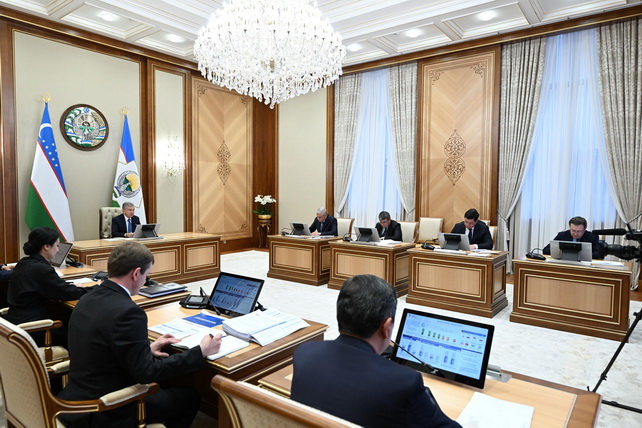
Mirziyoyev Outlines Major Reform of Insolvency System
Tashkent, Uzbekistan (UzDaily.com) — President Shavkat Mirziyoyev reviewed a presentation on reforming the country’s insolvency framework and introducing new approaches to financially rehabilitate struggling enterprises.
Uzbekistan has been steadily implementing measures to develop the private sector, support entrepreneurship, and create a more favorable business environment. As a result, the number of individual entrepreneurs has exceeded 300,000, while self-employed individuals have reached 5.5 million. Over the past five years, the share of private business in the economy has grown from 45 to 58 percent.
In 2026, authorities plan to allocate 140 trillion soums in credit resources to small and medium-sized enterprises (SMEs). Additionally, $8 billion in external financing will be mobilized for entrepreneurship at the community level through banks, and 20 trillion soums will be directed to regional infrastructure modernization in production, trade, and services.
Despite these efforts, challenges remain in preserving existing businesses and jobs, and in supporting companies facing early-stage financial difficulties. The number of inactive and liquidated small companies continues to grow, highlighting the current system’s insufficient focus on business recovery.
The effectiveness of insolvency procedures remains low. Of 93,000 enterprises experiencing financial deterioration, proceedings have been initiated in only 10,000 cases. Over the past five years, of 68 enterprises undergoing financial rehabilitation, only seven successfully resumed operations. Criticism was also directed at the performance of judicial managers, citing delayed proceedings, unsubstantiated conclusions, and weak oversight of fraudulent bankruptcies. Compensation issues that hinder the attraction of qualified specialists were also noted.
A lack of digitalization in the sector was highlighted, including the absence of online monitoring, unified registries of insolvent enterprises, and inefficient interagency data exchange.
To address these shortcomings, new institutional mechanisms were proposed. The Ministry of Justice plans to establish an Agency for Insolvency Affairs, tasked with coordinating state policy, analyzing bankruptcy causes, and assisting in enterprise financial rehabilitation.
A professional Chamber of Judicial Managers is also proposed to enhance oversight, provide training, monitor legal compliance, and protect the interests of managers.
New financial instruments for business support were presented. These include guarantees for SMEs through the National Business Guarantee Company and preferential credit lines via the Entrepreneurship Development Company. Principal and interest payments on bank loans will be suspended during rehabilitation, with repayment over three years, facilitating debt restructuring and business recovery.
Procedures for deferring and restructuring tax and credit liabilities will be simplified. Local councils and tax authorities, subject to collateral, bank guarantees, or insurance policies, will be authorized to grant deferred or staged payments.
Pre-trial rehabilitation tools will be expanded, including creditor agreements, additional financing, obligation deferrals, debt buyouts, business repurposing, enterprise reorganization, and employee upskilling.
Digitalization initiatives will create a unified electronic platform for insolvency cases with open registries of enterprises, judicial managers, and rehabilitation procedures. All stages—from application submission to liquidation—will be digitized, with public and media access to information. This is expected to increase transparency, accelerate data exchange, and reduce case processing times.
President Mirziyoyev emphasized that entrepreneurship support should not only focus on creating new companies but also on sustaining existing businesses, providing timely assistance to those in difficulty, and returning them to economic activity.
Responsible agencies were instructed to radically modernize the insolvency system using international best practices, implement contemporary management approaches, effective rehabilitation mechanisms, and digital solutions.
#Shavkat Mirziyoyev