Stay up to date with the latest news
Subscribe to our telegram channel

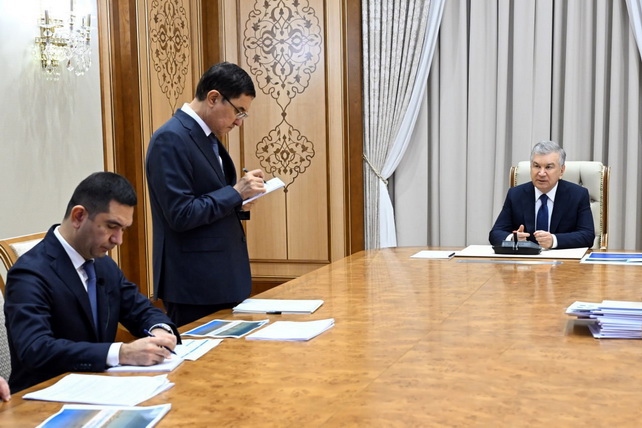
Mirziyoyev Orders Strengthened Work of Mahallas to Reduce Poverty and Unemployment
Tashkent, Uzbekistan (UzDaily.com) — President Shavkat Mirziyoyev was briefed on the implementation of measures aimed at transforming mahallas into territories free from unemployment and poverty, ensuring sustainable employment for the population.
At a critically oriented meeting, unutilized opportunities and shortcomings in the work of local structures were identified.
Special attention was given to the absence of clear criteria for evaluating the effectiveness of members of the mahalla “seven.”
The President emphasized the need to strengthen their accountability for achieving the primary goal — reducing unemployment and poverty levels.
The activities of the “seven” should directly impact the growth of employment and household incomes, while work in this area must be as targeted and results-oriented as possible.
The head of state instructed that problematic areas within mahallas be identified, their “growth points” determined, and systemic measures developed and implemented, taking into account citizens’ appeals directly at the local level.
During the discussion, the most problematic territories were reviewed, and the task was set to expand access to infrastructure, electricity, and the internet, as well as to utilize the potential of household plots to create new sources of income.
It was noted that by the end of the current year, the poverty rate should decrease from 8.9% at the beginning of the year to 6%, with a target of 4.5% set for the following year.
To achieve these goals, a comprehensive organization of work in mahallas is planned, expanding coverage of services aimed at sustainable employment, vocational training, involving the population in entrepreneurial activities, and creating additional sources of income.
The President stressed the need to develop individual programs for each low-income family, taking into account their real capabilities and needs.
Under the project-based approach, approximately one million citizens are expected to be reached through initiatives such as “Partnership of Employment Agencies with Employers,” “Equal Opportunities — Inclusive Employment,” “Towards a Sustainable Future,” “20 Local Brands,” “One Contour — One Product,” “Entrepreneurship Development in Mahallas,” programs for improving irrigation of leased lands and household plots, renovation of old orchards, planting thousands of hectares of fruit trees, the creation of export cooperatives, and other initiatives.
Measures to reduce poverty and unemployment through the implementation of small and medium projects in mahallas, development of infrastructure in border and enclave areas, creation of 24-hour streets, tourist mahallas, micro-industrial centers, and the development of coastal and road infrastructure were also discussed.
The progress of the 2025 employment program and the formation of the 2026 plan, including measures to reduce informal employment, were reviewed.
The President instructed the responsible authorities to ensure targeted problem-solving at the local level, increase the effectiveness of practical work based on the real needs of the population, and achieve a high level of accountability in implementing measures to reduce unemployment and poverty.