Stay up to date with the latest news
Subscribe to our telegram channel

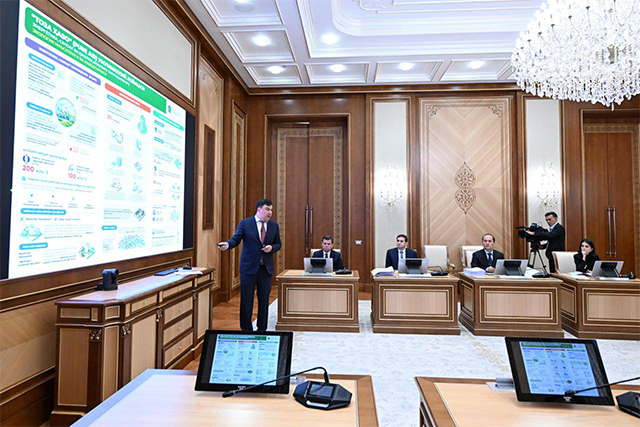
Mirziyoyev Approves Uzbekistan’s Green Plans to 2030
Tashkent, Uzbekistan (UzDaily.com) — President of Uzbekistan Shavkat Mirziyoyev reviewed a presentation of priority nationwide projects in the field of ecology and environmental protection for 2026–2030 and approved the proposed initiatives on 23 March.
The discussion outlined measures aimed at improving air quality, expanding green spaces across cities and regions, advancing environmental education, and strengthening the scientific basis for combating desertification. A central component is the “Clean Air” project, which provides for a comprehensive set of measures to reduce pollution.
It was noted that in Tashkent, as well as in Navoi, Ferghana, Chirchik and Termez, instances of air pollution exceeding permissible levels have been recorded. The main causes include industrial growth, widespread use of carbon-based fuels, a rising number of vehicles, natural factors, and insufficient monitoring.
Targets set through 2030 include reducing pollutant emissions, increasing their capture rates at industrial facilities, cutting harmful vehicle emissions, and decreasing the number of days when PM2.5 levels exceed safe thresholds. At the same time, some improvement has already been observed: in January–February this year, concentrations of fine particulate matter in the capital declined compared to the same period last year.
The project provides for the installation of automated monitoring stations, filters and energy-efficient equipment, along with stricter requirements for industrial enterprises and the construction sector. Plans also include increasing green coverage in urban design, improving control over construction materials and waste management, and introducing mandatory environmental assessments.
Special attention is being given to reducing the impact of natural dust. Measures include creating a green belt around Tashkent, establishing protective green barriers in several regions, developing water bodies and increasing the number of fountains, as well as processing plant waste.
In the transport sector, stricter fuel standards, the introduction of environmental vehicle classifications, and fleet modernization are expected to help reduce pollution levels in major cities.
A significant part of the program focuses on reforming greenhouse farming. It was noted that a high concentration of greenhouses in Tashkent and the surrounding region, many of which use coal and fuel oil, has a negative environmental impact. Authorities propose gradually relocating such facilities to regions with more favorable climatic conditions. In particular, an agropark covering at least 940 hectares is planned in Sherabad district of Surkhandarya region. From October 1, 2026, construction of new greenhouses in the capital region is expected to be restricted.
Within the framework of the “Yashil Makon” program, a concept for establishing botanical gardens and dendrological parks was presented. By 2028, such facilities are to be created in all regions of the country, including Karakalpakstan and Tashkent, while overall green coverage is expected to increase from 14.2% to 30% by 2030. Concentrations of PM2.5 and PM10 are projected to decline by 20–25%.
In the capital, a National Dendrological Park covering 108 hectares is planned, with tens of thousands of trees and shrubs to be planted. The project is aimed at preserving biodiversity, promoting scientific research, and improving the urban microclimate.
In education, proposals include the development of an “EcoCulture” system and the creation of “green technical schools” in all 14 regions, integrated into the structure of a Green University. By the 2028–2029 academic year, student enrollment is expected to reach 10,000.
A separate focus was placed on a strategy to combat desertification. A significant share of the country’s territory is affected by land degradation, causing annual economic losses. In response, plans include establishing a regional scientific center equipped with modern laboratories and digital monitoring systems.
The president emphasized the importance of these initiatives for ensuring environmental sustainability, protecting public health, and improving quality of life, and in general approved the proposed projects.
#Shavkat Mirziyoyev