Stay up to date with the latest news
Subscribe to our telegram channel

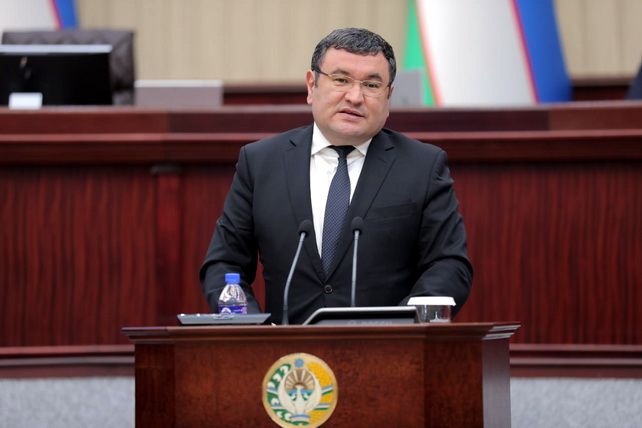
Ministry of Energy Explains Causes of Temporary Electricity Supply Restrictions in Uzbekistan
Tashkent, Uzbekistan (UzDaily.com) — On 11 December, Uzbekistan’s Minister of Energy, Jurabek Mirzamakhmudov, addressed the Legislative Chamber of the Oliy Majlis regarding temporary electricity supply interruptions, explaining that they were caused by emergency circumstances beyond standard operational scenarios.
According to the Minister, the Ministry of Energy established a central coordination headquarters operating around the clock to prepare for the autumn-winter season. Nevertheless, unforeseen situations arose, including a reduction in gas flow by 6 million cubic meters per day due to a technical issue in a neighboring country. In response, emergency measures were implemented.
A similar situation recently occurred at the Syrdarya Thermal Power Plant, built by ACWA Power, where for the first time in 30 years a rotor malfunction was detected in one of the Mitsubishi generators. Thanks to presidential intervention, the damaged rotor was transported on the country’s largest cargo plane and is now being installed, with reserve capacities brought online in the meantime.
The Minister also noted the commissioning of new wind and solar energy capacities. However, due to the absence of wind and sunlight during peak consumption hours, it was necessary to reduce the load on major consumers and temporarily limit electricity supply where unavoidable. Previously, such measures were referred to as rolling blackouts.
Mirzamakhmudov presented statistics showing a significant reduction in electricity supply restrictions over the years: 4 billion kWh in 2013, 1.5 billion kWh in 2021, 2 billion kWh during the 2022 crisis, 1.63 billion kWh in 2023, and 357 million kWh in 2024. In November 2025, restrictions amounted to 24 million kWh, and in December — 18 million kWh.
Earlier, the Ministry of Energy had warned of possible interruptions during peak hours — from 5 p.m. to 9 p.m. — emphasizing that these measures are temporary and aimed at maintaining the stability of the country’s energy system.