Stay up to date with the latest news
Subscribe to our telegram channel

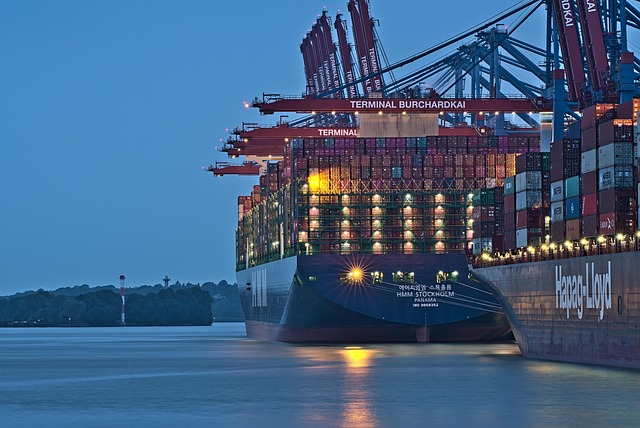
Middle East Conflict Slows Global Trade Growth in 2026 / Photo: Pixabay/Smartschwarz
Tashkent, Uzbekistan (UzDaily.com) — Global trade, which had been expected to grow rapidly in 2025 due to a surge in artificial intelligence (AI) goods, is projected to slow in 2026, according to a report by the World Trade Organization (WTO).
WTO economists caution that the ongoing conflict in the Middle East could further reduce trade growth while keeping energy prices high. The situation also puts pressure on food supplies and services trade due to disruptions in transport and travel. Prospects could improve if the conflict ends quickly and AI investment continues to expand.
The WTO’s latest report, Global Trade Outlook and Statistics, released March 19, presents a baseline growth scenario without energy price shocks. Under this forecast, global merchandise trade growth is expected to slow to 1.9% in 2026, down from 4.6% in 2025, as trade normalizes after the surge in AI goods demand and preemptive imports to avoid new tariffs. Merchandise trade is projected to grow by 2.6% in 2027. Commercial services trade growth is expected to slow to 4.8% in 2026 from 5.3% in 2025 and then accelerate to 5.1% in 2027. Overall growth in goods and services trade is projected at 2.7% in 2026, compared to 4.7% in 2025. Global GDP growth is forecast to slow from 2.9% in 2025 to 2.8% in 2026 and 2027.
In a scenario where oil and liquefied natural gas prices remain high throughout 2026, GDP growth is projected to fall by 0.3 percentage points, and trade growth by 0.5 points, with energy-importing regions losing up to 1 point. Merchandise trade would grow only 1.4%, while services trade growth would slow to 4.1%.
WTO Director-General Ngozi Okonjo-Iweala noted: “The forecast reflects the resilience of global trade thanks to high-tech goods, digital services, supply chain adaptation, and avoidance of retaliatory tariffs. However, this baseline forecast is under pressure from the Middle East conflict. Prolonged high energy prices increase risks for global trade, potentially affecting food security and raising costs for consumers and businesses. WTO members can mitigate the impact by maintaining predictable trade policies and enhancing supply chain resilience.”
Beyond fuel, the blockade of the Strait of Hormuz has disrupted fertilizer shipments, critical for global agriculture, which normally transits about a third of global fertilizer exports. Major producers such as India, Thailand, and Brazil rely on this region for 40%, 70%, and 35% of their urea supplies, respectively. Gulf states also face food security challenges, with average dependence on rice imports at 75% and maize, soy, and vegetable oil over 90%, while alternative routes drive up prices.
WTO economists note that trade growth could accelerate if the conflict is short-term and AI-related spending remains high in 2026–2027. In that case, merchandise trade growth could rise 0.5 percentage points to 2.4% in 2026 and 2.7% in 2027.
A scenario combining negative and positive factors—high energy prices alongside continued AI trade growth—would result in merchandise trade growth in 2026 close to the baseline forecast.
In 2025, global merchandise trade grew 4.6%, exceeding the WTO’s October 2025 forecast of 2.4%. Tariff impacts were smaller than expected due to U.S. suspension of new tariffs until August, limited responses by other countries, and numerous exemptions.
The surge in AI-related goods offset tariff impacts and uncertainty: trade in these goods rose 21.9% year-on-year, reaching $4.18 trillion in 2025 compared to $3.43 trillion in 2024. These goods accounted for 42% of overall trade growth, despite representing only one-sixth of total merchandise trade. Key AI goods, including chips, semiconductors, and data transmission equipment, were exempt from most new tariffs.
As of February 2026, 72% of global trade operated under most-favored-nation (MFN) terms, confirming the predominance of this tariff system.
Under the baseline scenario in 2026, merchandise imports are projected to rise 3.3% in Asia, 3.2% in Africa, 2.5% in South America, 1.3% in Europe, and 1.0% in the Middle East. North America’s imports remain nearly unchanged (+0.3%), while the CIS is expected to decline by 2.0%. Exports: Asia +3.5%, South America +3.5%, North America +1.4%, CIS +1.3%, Africa +1.2%, Middle East +0.6%, Europe +0.5%. Least developed countries are expected to see 4.5% import growth and 2.9% export growth.
High energy prices disproportionately impact energy-importing regions like Asia and Europe, while energy exporters gain additional revenue and can increase imports.
After 5.3% growth in 2025, global services trade is projected to expand 4.8% in 2026 and 5.1% in 2027 under the baseline scenario. In the high-energy-price scenario, growth slows to 4.1% in 2026 and recovers to 5.2% in 2027.
The Middle East conflict threatens key transport corridors: 138 commercial vessels previously transited the Strait of Hormuz daily, now nearly zero. The region accounts for 7.4% of transport services exports and connects Europe, Asia, and Africa, but disruptions have canceled over 40,000 voyages and increased transport and insurance costs. A short-term conflict would cause temporary interruptions with rapid recovery, while a prolonged crisis could drive structurally higher fuel and transport prices, reduce transit activity, and shift global trade flows.