Stay up to date with the latest news
Subscribe to our telegram channel

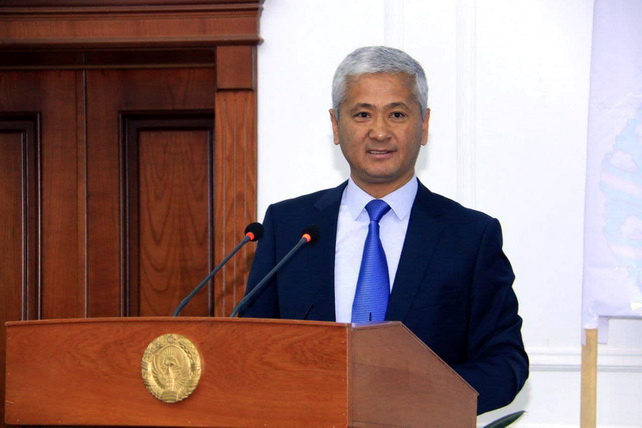
Former Hokim of Sharaf-Rashidov District Sentenced to 11 Years for Bribery and Abuse of Power
Tashkent, Uzbekistan (UzDaily.com) — The Zaamin District Criminal Court has concluded proceedings against former Hokim of Sharaf-Rashidov District Makhmud Kholbutayev and one of his subordinates, the press service of the Supreme Court of Uzbekistan reports.
Both were found guilty of accepting bribes and a number of other offenses under the Criminal Code of the Republic of Uzbekistan and sentenced to imprisonment.
The case stems from events in July 2025, when Kholbutayev and a senior specialist of the Sharaf-Rashidov District Hokimiyat were detained while receiving a bribe. The senior specialist had promised the head of a construction company a plot of land for the construction of a multi-story residential building in the district, demanding US$30,000 in return. The defendants received US$10,000, which were passed on to the district hokim.
Under the verdict, Makhmud Kholbutayev was found guilty of embezzlement through misappropriation or misuse of funds, abuse of official authority, acceptance of a bribe in an especially large amount, and violation of the procedure for allocating land plots. He was sentenced to 11 years' imprisonment, stripped of the right to hold positions in state authorities and administrative bodies as well as financially responsible positions for three years, and ordered to pay a fine of 150 base calculated units amounting to 61.8 million soums.
The senior specialist for construction, communications, utilities, ecology, and landscaping at the hokimiyat, identified by the initials N.I., was found guilty of complicity in accepting a bribe in an especially large amount and sentenced to seven years' imprisonment, with a two-year ban on holding positions in state authorities and administrative bodies as well as financially responsible positions.
Both convicts will serve their sentences in general-regime correctional colonies.
The case attracted widespread public attention, underscoring the need for strict oversight of public officials and greater transparency in the allocation of land plots and construction projects.