Stay up to date with the latest news
Subscribe to our telegram channel

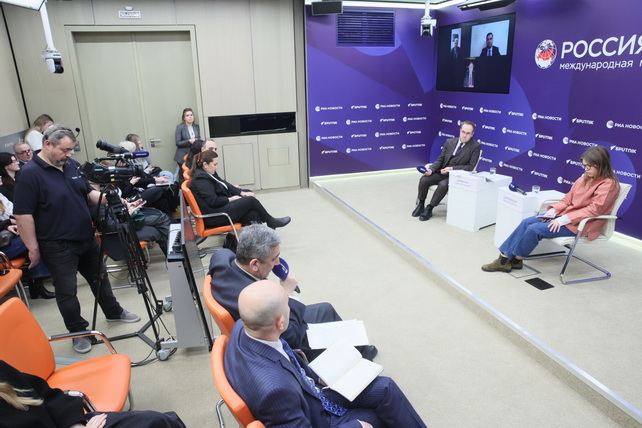
Experts Discuss Significance of the Khujand Declaration and Its Role in Peacebuilding
Tashkent, Uzbekistan (UzDaily.com) — On 10 December, a roundtable was held in Moscow on the topic “The Khujand Declaration of Eternal Friendship as an Example of a Constructive Approach to Resolving Issues of Development and Strengthening Cooperation Between Countries and Peoples.”
Participants discussed the importance of the Khujand Declaration, which has become a symbol of peaceful resolution of long-standing border disputes and an example of diplomacy based on dialogue and mutual trust.
In March 2025, Tajikistan and Kyrgyzstan fully resolved one of the longest-standing and most sensitive bilateral issues — the demarcation of the state border. Later, on March 31, the presidents of Tajikistan, Kyrgyzstan, and Uzbekistan signed an agreement in Khujand on the tripoint of their state borders and adopted a trilateral declaration of eternal friendship, completing the legal formalization of their shared boundaries.
The move was highly praised by the international community: in September 2025, the leaders of the three countries — Emomali Rahmon, Sadyr Japarov, and Shavkat Mirziyoyev — were awarded the Leo Tolstoy International Peace Prize.
Experts from Russia, Kazakhstan, and Tajikistan participated in the roundtable, including Ivan Safranchuk, senior researcher at the MGIMO Institute of International Studies; Elena Guskova, head of the Center for Contemporary Balkan Crisis Studies at the Russian Academy of Sciences; Darya Saprynskaya, expert at the Valdai Club; Hidoiatzoda Jamoliddin, board member of the Central Asian Expert Club “Eurasian Development”; and Kazakh scholar Academician Akimjan Arupov. Political scientist Pavel Sklyanchuk moderated the session.
Participants emphasized that the Khujand Declaration is a landmark precedent for the region, demonstrating that even the most complex interstate issues can be resolved through direct dialogue without external pressure.
The declaration created a qualitatively new atmosphere of trust in Central Asia and offers the international community a model of 21st-century diplomacy based on non-violence, humanism, and respect for sovereignty.
Akimjan Arupov noted that the dynamic development of Central Asia makes the region a key participant in the global economy, and border resolution serves the interests of both neighboring republics and the international community. Elena Guskova highlighted the symbolism of the word “eternal” in the declaration’s title, noting that the document reflects a new format of diplomacy emerging in a multipolar world, and that awarding the Tolstoy Prize elevates the diplomatic achievement to universal humanitarian significance.
Ivan Safranchuk stressed the moral dimension of contemporary politics, noting that the Tolstoy Prize sets high ethical standards and recognizes the real contribution of leaders to peacebuilding. Hidoiatzoda Jamoliddin, citing Leo Tolstoy, emphasized the humanitarian nature of the leaders’ decision, made in the interests of the residents of the Fergana Valley. Darya Saprynskaya added that the declaration marked a turning point, after which Russia viewed Central Asia in a new light, opening new opportunities for the region.
Advisors and first secretaries from the embassies of Uzbekistan, Tajikistan, and Kyrgyzstan expressed gratitude on behalf of their countries for the recognition of their leaders’ efforts, emphasizing that the declaration was a significant step toward building trust, expanding cooperation, and forming a positive international image of the region.
The Leo Tolstoy International Peace Prize, established in 2022, is a public and international award recognizing individuals and organizations that have made significant contributions to peace and humanism. Laureates are selected by a distinguished international jury, and the award is gaining increasing recognition in the global humanitarian arena, forming a “golden fund” of peace initiatives.