Stay up to date with the latest news
Subscribe to our telegram channel

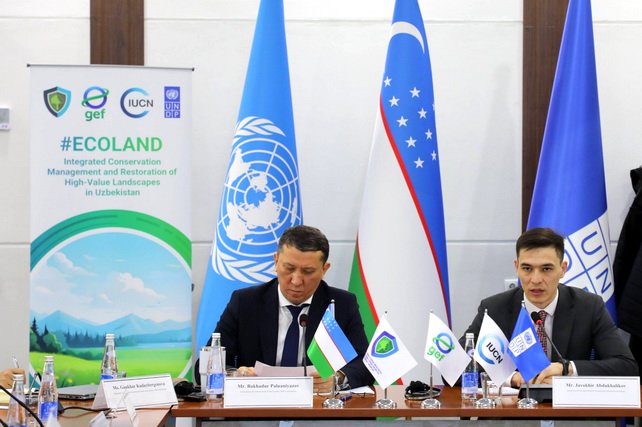
Environmental Projects by UNDP and IUCN: New Sustainable Development Priorities Outlined in Tashkent
Tashkent, Uzbekistan (UzDaily.com) — On 26 December, a joint meeting was held at the United Nations Development Programme (UNDP) office in Tashkent, marking the fifth session of the Coordination Council for the Aral Sea Wetlands project and the first meeting of the Project Council for the EcoLand initiative — “Integrated Management for the Conservation and Restoration of High-Value Landscapes in Uzbekistan.”
The event brought together representatives of the National Committee on Ecology and Climate Change, UNDP, the International Union for Conservation of Nature (IUCN), the expert community, and other key stakeholders.
During the meeting, an overview of the results of the Aral Sea Wetlands project was presented. This project has been implemented in the Republic of Karakalpakstan and the Bukhara region — areas most affected by land degradation and the loss of aquatic ecosystems.
The project has proven to be an effective platform supporting protected natural areas and local communities, combining practical conservation measures, institutional development, and capacity building.
Key outcomes of the project include:
improved access for wildlife to water resources, including the drilling and outfitting of wells in the “Saigachiy” state reserve;
strengthening the material and technical base of the national nature parks “Southern Ustyurt” and “Central Kyzylkum”;
assessment of the management effectiveness of specially protected natural areas, with practical recommendations developed for the conservation of rare and endangered species;
implementation of land and ecosystem restoration activities, including afforestation and greening efforts in the area surrounding the city of Muynak;
development of a methodology for assessing the water needs of ecosystems, along with training on water resource modeling in the Amu Darya River delta.
The institutional significance of establishing a Regional Committee for Integrated Territorial Planning was emphasized, as was the formal approval of the buffer zone of the “Aktau–Tamdy” state nature reserve by the Cabinet of Ministers.
Launch of the EcoLand Project and Priorities for 2026
The first meeting of the EcoLand Project Council, implemented with the support of the Global Environment Facility, marked the official launch of a new phase of conservation activities. Participants approved the 2026 work plan, the institutional structure of the Project Council, the updated budget, adjustments to the project team composition, and a revised Results Framework for the project.
From 2026 onward, the EcoLand project will be implemented along four key directions:
the development of scientifically grounded environmental policies;
the introduction of innovative ecosystem restoration solutions;
the establishment of sustainable financial mechanisms;
strengthening national systems for monitoring, training, and knowledge exchange.
Discussions highlighted that Uzbekistan’s unique ecosystems play a crucial role in ensuring sustainable development and the well-being of its population. At the same time, the country faces challenges related to land degradation, water scarcity, biodiversity loss, and the impacts of climate change. Addressing these challenges systematically is considered a priority in the country’s environmental and climate policies.
It was emphasized that the successful implementation of projects largely depends on the active participation of all stakeholders and the contribution of international partners, particularly UNDP and IUCN, who provide access to global best practices and leading expertise.
The experience accumulated through the Aral Sea Wetlands project will serve as a strong foundation for the effective rollout of EcoLand, enhancing investment efficiency and strengthening cross-sectoral coordination.
At the conclusion of the meeting, participants reaffirmed their readiness for continued close cooperation and their commitment to advancing Uzbekistan’s environmental and climate agenda at both the national and international levels.