Stay up to date with the latest news
Subscribe to our telegram channel

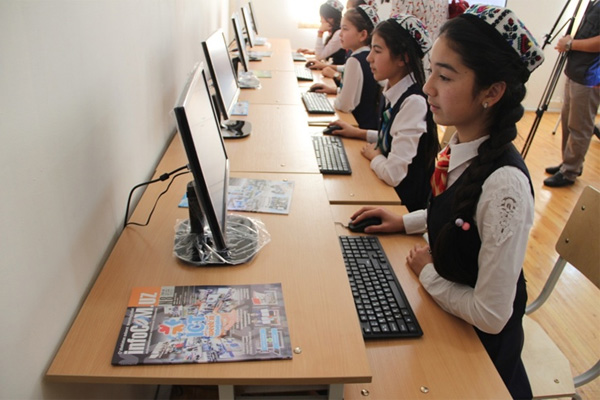
Tashkent, Uzbekistan (UzDaily.com) -- The Ministry of Public Education of Uzbekistan published a draft presidential decree on the approval of the Concept for the development of the public education system of the Republic of Uzbekistan until 2030.
The document proposes to approve the Concept of development of the public education system of the Republic of Uzbekistan until 2030 and a roadmap for its implementation. The concept defines measures for the development of public education in Uzbekistan until 2030.
The main objectives of the Concept are:
The draft concept states that as of January 1, 2019, there are 9691 comprehensive schools in the Republic of Uzbekistan (including 335 state specialized schools with in-depth study of certain subjects). The total number of students in secondary schools is more than 5.2 million people. About 7.5 thousand students study in 37 non-state educational institutions.
Additional education, as a variable part of general education, allows developing creative inclinations and abilities of children. Additional education is represented by 211 different out-of-school education centers Barkamol Avlod. The number of children attending these centers is more than 140 thousand. The total number of circles in various areas is 5054.
Also, the country pays special attention to the development of secondary vocational education, which is organized on the basis of 1,494 educational and industrial complexes in 51 specialties.
In addition, in the public education system, there are 85 specialized schools and boarding schools for children with disabilities, including 50 for children with intellectual disabilities of development, where 18,533 children study.
There are 21 boarding schools of sanatorium type and 9 boarding schools for children with scoliosis, 12 boarding schools for children with chronic respiratory diseases.
In addition, 10,077 children with physical or mental developmental disabilities and needing long-term treatment receive home education. Education of children, with especially difficult conditions of upbringing, is carried out in 2 institutions.
In the Republic of Uzbekistan, there are 19 houses of mercy and 3 children’s campuses in which 2,441 orphans and children left without parental care are trained.
The concept also identifies existing problems in the field of public education. In particular, there are problems in the area of school administration. It was noted that local government agencies do not provide assistance to schools. Also, the level of state educational services does not meet the expectations and requirements of the population and business.
The draft document stresses that there are shortcomings in the methodological provision of general secondary education. There is no textbook variation system. There are also problems in the field of material equipment and school financing.
The concept will determine the main directions of development of the public education system. According to the document, the priority areas of development are the modernization of the content of education, structural changes in the education system and ensuring equality of access to quality education.
In particular, within the framework of the concept, measures will be taken to improve the content of general secondary education in order to create a competence-based training model aimed at studying, first of all, foreign languages, computer science, mathematics, physics, chemistry and biology, which are further needed for mastering professions demanded in within the framework of the created innovative economy on the basis of new training standards, programs, textbooks and teaching materials.
It is expected that the conditions will be created for development of children’s abilities in the choice of profession and self-planning of a professional career, and preparation for the development of modern popular professions.
It is planned to modernize special education to ensure full coverage of all needy children with special psychological and pedagogical assistance with the involvement of parents in the process of teaching and raising a child.
Within the framework of the concept, measures will be taken to improve the quality of the resource supply of educational institutions, especially those located in remote rural areas, as well as to provide access to all secondary educational institutions to the Internet and increase the level of computerization of the educational process.
It is planned to create conditions for increasing the attractiveness of the work of teachers in educational institutions located in remote rural areas.
Support will be provided to children with disabilities and they will be integrated into regular educational institutions. There will also be expanded the network of non-state school educational institutions, as well as educational institutions operating in the framework of public-private partnerships.
As a result of the implementation of the concept, Uzbekistan will introduce new state educational standards and curricula for general secondary education that meet the requirements of a modern innovative economy, taking into account the STEAM disciplines, with an emphasis not on memorizing and reproducing information, but on developing competencies and skills important for life in the XXI century (critical thinking, independent search and analysis of information, etc.).
Modern educational technologies will be introduced to ensure the expansion of competencies mastered by students. Presidential schools and “Modern schools” will be created in the country, etc.