Stay up to date with the latest news
Subscribe to our telegram channel

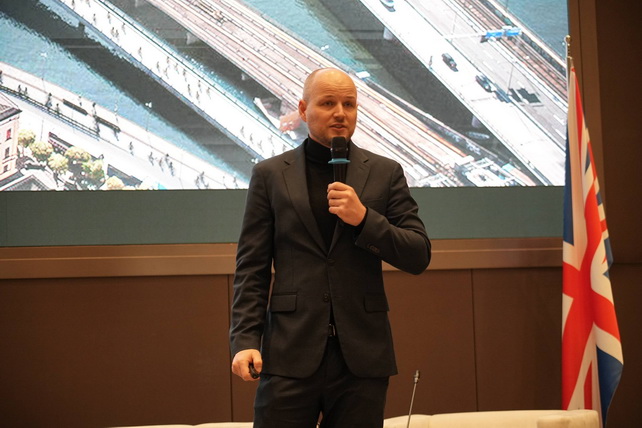
British-Uzbek Infrastructure Conference Held in Tashkent
Tashkent, Uzbekistan (UzDaily.com) — A British-Uzbek Infrastructure Conference was held in Tashkent, organized by the UK Department for Business and Trade (DBT).
The event brought together representatives of government bodies and enterprises, investors, as well as leading companies from the United Kingdom and Uzbekistan, to discuss the practical development of cooperation in the country’s priority infrastructure sectors.
The conference was opened by the British Ambassador to Uzbekistan, Timothy Smart. Key speakers included Lord Alderdice, the UK Trade Commissioner for Central Asia and Azerbaijan, and Deputy Prime Minister of Uzbekistan, Jamshid Khodjaev.
They emphasized the strengthening of economic ties between the two countries and highlighted the strategic role of infrastructure in shaping future trade and investment projects. Presentations focused on the financial sustainability of projects, the involvement of international expertise, and the importance of a stable pipeline of projects for economic growth.
Transport infrastructure became one of the central topics of discussion. Representatives from PwC, the Ministry of Transport of Uzbekistan, Uzbekistan Airports, Arup, Zaha Hadid Architects, and Korea Eximbank explored ways to modernize railways, airports, and stations in line with international investor requirements.
Speakers stressed the importance of integrated planning, high-quality feasibility studies, and the development of financial models capable of attracting foreign capital for complex infrastructure projects.
The urban planning and digital construction session generated significant interest. Companies including Foster + Partners, Worley, Tashkent Invest, Cross Works, Buro Happold, and Connected Places Catapult examined opportunities to shape the next generation of Uzbek cities through master planning, the renovation of cultural heritage sites, and the use of digital design tools, including digital twins. Discussions emphasized the importance of high-quality design and modern supply standards for sustainable and efficient urban development.
The financing and investor confidence session featured participation from LBBW, the Ministry of Economy and Finance of Uzbekistan, the Asian Development Bank (ADB), MUFG Bank UK, JP Morgan, and UK Export Finance (UKEF). Experts discussed key factors affecting project bankability, including risk allocation, realistic timelines, the use of public-private partnership (PPP) models, and early engagement with commercial lenders and international financial institutions. Particular attention was given to UKEF’s role in creating competitive financing conditions for infrastructure projects involving British companies.
In the final session on critical infrastructure, representatives from the Ministry of Energy, the Ministry of Health, Infrasia Capital, and Intec Energy Solutions discussed the development of the energy network, modernization of power grids, and necessary infrastructure for modern healthcare facilities. The importance of international technical expertise and private sector involvement in ensuring reliable energy systems and advanced medical infrastructure was emphasized.
The conference concluded with a UKEF-organized workshop presenting practical guidance on using buyer credit guarantee schemes for smaller-scale transactions. Following the workshop, B2B meetings were held, allowing British and Uzbek companies to explore commercial opportunities and lay the groundwork for continued cooperation.