Stay up to date with the latest news
Subscribe to our telegram channel

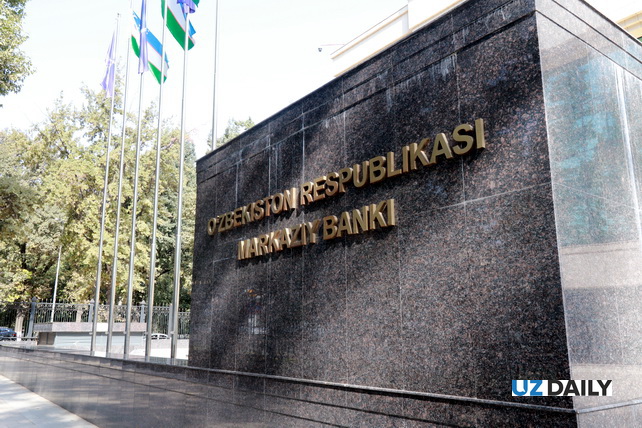
Assets of Non-Bank Financial Institutions in Uzbekistan Grow Nearly Sixfold
Tashkent, Uzbekistan (UzDaily.com) — In recent years, non-bank financial institutions (NBFIs) have gained significant importance in Uzbekistan’s financial system. According to the Central Bank of Uzbekistan, the share of assets held by other financial organizations in the total financial system reached 6.1% as of 1 October 2025, up from 5.4% at the end of 2024 and 3.3% at the end of 2019.
Asset growth in NBFIs has significantly outpaced that of the banking sector. Over the past six years, banking system assets increased 3.2 times, whereas assets of other financial organizations rose nearly sixfold.
Loans extended by NBFIs to the real sector have also grown rapidly. As of 1 October 2024, NBFI claims on the real sector amounted to 20.5 trillion soums, increasing to 27.3 trillion soums by October 1, 2025—growing twice as fast as bank lending during the same period.
NBFIs demonstrate higher capitalization levels. As of October 1, 2025, commercial banks’ asset capitalization was 16.2%, compared to 50.9% for NBFIs (up from 45.2% on October 1, 2024).
Total financial assets of NBFIs reached 51.9 trillion soums, a 35.6% increase year-on-year (38.2 trillion soums as of 1 October 2024). Growth by type of organization included: leasing companies (+38.6%), insurance companies (+10.7%), microfinance institutions (+49.9%), and the Deposit Insurance Agency (+48.4%).
The net negative external assets of NBFIs grew 19.2%, reaching -3.5 trillion soums, as their liabilities to non-residents increased faster than their claims. For example, the Mortgage Refinancing Company (IQMK) saw its external liabilities triple to 984.8 billion soums, while insurance companies’ claims on non-residents rose 5% to 794.7 billion soums by the end of Q3 2025.
NBFIs’ claims on the banking sector accounted for 33.8% of total financial assets, totaling 17.5 trillion soums. Most of these claims were held by insurance companies (37.1%), IQMK (33.4%), and payment organizations (13.8%). IQMK’s expanded resources for mortgage financing pushed targeted and other credit funds to 5.6 trillion soums, with deposits making up 56.4% (9.9 trillion soums) of claims on banks.
Net claims on the central government decreased from -2.4 trillion soums in Q3 2024 to -1.7 trillion soums in 2025, thanks to investments in government securities.
Overall claims on other sectors—state and non-state non-financial organizations and individuals—grew positively. Total credit exposure to the economy increased 33% year-on-year to 27.3 trillion soums, primarily driven by leasing (14.2 trillion soums) and microfinance institutions (9.6 trillion soums).
At the end of Q3 2025, the majority of NBFI liabilities consisted of financial instruments such as equity, capital, and borrowed funds. NBFIs did not attract deposits or engage in derivative operations; thus, deposit and financial derivatives sections of liabilities are zero. The share of capital in total liabilities reached 51% (26.4 trillion soums).
Loans reflect NBFIs’ borrowed funds from the economy (excluding non-residents and the central government), with major borrowers being microfinance and leasing companies. A significant portion of these loans is directed to banks, totaling 4.4 trillion soums by the end of the reporting period.