Stay up to date with the latest news
Subscribe to our telegram channel

Akramjon Ne’matov: “Regional Cooperation Offsets the Dysfunction of International Coordination”
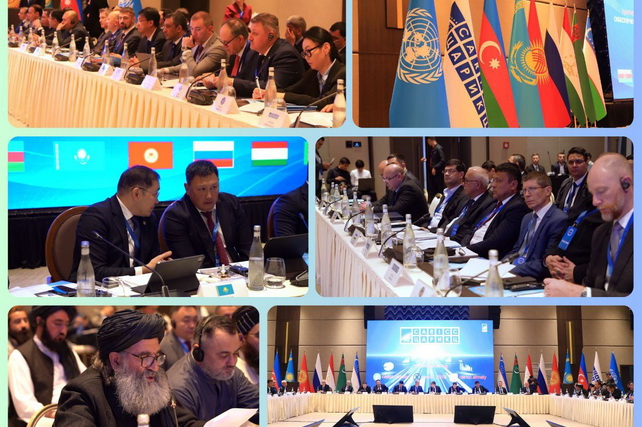
Tashkent, Uzbekistan (UzDaily.com) — Regional cooperation offsets the dysfunction of international coordination. This view was expressed by Akramjon Ne’matov, First Deputy Director of the Institute for Strategic and Interregional Studies under the President of the Republic of Uzbekistan (ISMI), speaking at the meeting of the Council of National Coordinators of CARICC, held on 5 December 2025, in Samarkand under Uzbekistan’s chairmanship.
The event brought together representatives of competent authorities from Central Asian countries, Azerbaijan, Russia, China, the United States, EU states, as well as international organizations including the UNODC, SCO RATS, and CSTO. For the first time, a delegation from Afghanistan, led by the Deputy Minister of Internal Affairs, participated.
The discussion focused on enhancing regional cooperation in combating illicit drug trafficking, strengthening inter-agency coordination and information exchange, countering the spread of synthetic drugs, developing preventive measures for youth as a key risk group, and implementing modern digital tools for monitoring and analyzing the narcotics situation.
Ne’matov noted that in current conditions, the demand, production, and circulation of narcotics, along with associated risks, are only expanding. He emphasized that the global context is rapidly changing, with intensifying great-power competition, a deepening trust crisis, declining effectiveness of multilateral security institutions, and increasing economic fragmentation and resource competition. Sanctions, protectionism, and dysfunction in international law exacerbate conflicts and expand “grey zones,” creating favorable conditions for the accelerated growth of transnational crime, including the drug trade.
According to the expert, the scale of the narcotics threat is driven by several factors. First, demographic dynamics: the growing share of youth — the main risk group, especially in Asian countries where rapid economic growth is accompanied by the erosion of traditional social structures, changing behavioral patterns, rising inequality, and stress — increases demand for narcotics.
Second, the spread of armed conflicts and crises creates new zones of weak governance, fostering drug production and trafficking networks, with narcotics serving as a source of conflict financing. In some countries, the drug trade has become part of the “survival economy,” entrenching long-term instability.
Third, the rapid development of digital technologies, the internet, and artificial intelligence radically transforms the drug market landscape, allowing criminal networks to cooperate anonymously, accelerating the circulation of prohibited substances, and complicating detection and control.
Ne’matov stressed that no single state can effectively counter transboundary drug threats alone. Geopolitical rivalry, confrontation, and bloc divisions hinder the creation of collective security mechanisms. In the context of global institutional degradation, regional formats play a crucial role and can compensate for the lack of international coordination.
He noted that Central Asian states, situated at the intersection of many of these risks, fully understand the scale of ongoing processes and demonstrate high responsibility to their populations. Over a relatively short period, the region has achieved historic progress: continuous political dialogue has been established, trust has been strengthened, and a space of good-neighborliness and partnership has been formed.
“Thanks to this, the region has moved from fragmented actions to a coherent and sustainable security architecture. Central Asia has proven that even under the most challenging conditions, it is possible to act collectively, assume responsibility, and create its own stable space,” Ne’matov affirmed.
In recent years, regular mechanisms have been launched — meetings of security council secretaries, defense ministers, intelligence chiefs, and joint exercises. Numerous regional cooperation platforms, including the Central Asian Expert Forum and Central Asian Security Forum, are actively functioning, forming a “strategic security framework” for the region.
Ne’matov highlighted the significance of decisions made at the 7th Consultative Meeting of Central Asian Heads of State in Tashkent. Two key documents were adopted — the Concept of Security, Stability, and Sustainable Development of Central Asia, and the Catalogue of Risks and Preventive Measures. He emphasized that “these documents represent a breakthrough in forming a common architecture of regional security. The Concept establishes principles of comprehensive, equal, and indivisible security, defines it as a multidimensional phenomenon, taking into account sustainable development alongside traditional threats, calls for a comprehensive approach with emphasis on preventive measures, and forms the foundation for strengthening the regional security complex, open to constructive and transparent cooperation with external partners.”
Based on the Concept and Risk Catalogue, Ne’matov proposed several steps to further enhance cooperation. First, creating a comprehensive regional program against drugs, including coordination of law enforcement activities, joint research and educational programs, and monitoring and prevention measures in Central Asia. Second, strengthening the operational mechanisms of CARICC as the primary regional platform, with focus on financial, institutional, and regulatory foundations. Third, intensifying anti-drug measures through establishing a Regional Council for Combating Drug Addiction to coordinate treatment and rehabilitation programs, promote research, share best practices, and develop preventive standards for youth.
In conclusion, the ISMI deputy director emphasized that the drug threat is directly linked to global instability, rising transboundary risks, and slowing sustainable development. He stressed that an effective response is possible only through coordinated, comprehensive action. Central Asia has shown readiness and capacity to take responsibility for regional security, and it is crucial to continue strengthening practical cooperation, developing joint programs, reinforcing regional institutions including CARICC, and creating specialized platforms to combat drug trafficking.
“Only systematic, sustainable, and proactive cooperation will allow us to provide a reliable response to one of the most serious transboundary threats facing our region,” Ne’matov concluded.