Stay up to date with the latest news
Subscribe to our telegram channel

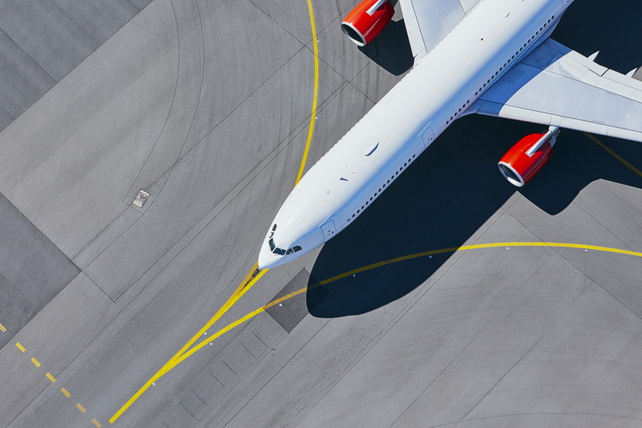
Airlines Expected to Maintain Record $41 Billion Profit with 3.9% Margin in 2026 — IATA
Tashkent, Uzbekistan (UzDaily.com) — The International Air Transport Association (IATA) released its financial forecast for the global aviation industry in 2026, highlighting stable profitability amid ongoing supply chain challenges and geopolitical instability.
According to the forecast, airlines’ aggregate net profit is expected to reach $41 billion, with a net margin of 3.9% — slightly below the historical peak of 5% but still reflecting high profitability for an industry traditionally characterized by thin margins. Average profit per passenger is projected at $7.90, roughly comparable to Apple’s profit on a single iPhone case.
“Airlines are expected to generate a 3.9% net margin and $41 billion in profits in 2026. This is highly positive news considering the challenges the industry faces — rising costs due to supply chain bottlenecks, geopolitical conflicts, slow growth in global trade, and increasing regulatory pressures,” said IATA Director General Willie Walsh.
He emphasized that overall industry margins remain low relative to the value airlines create by connecting people and economies, highlighting that Apple earns more from a single iPhone accessory than airlines make per passenger.
Cargo Aviation — Key Driver
The report highlighted the critical role of cargo aviation. Marie Owens Thomsen, IATA Senior Vice President for Sustainability and Chief Economist, noted that forward planning in 2025 was remarkable, with Chinese exporters and global importers pre-purchasing goods to mitigate tariff impacts. Aviation helped trade not only remain stable but exceed expectations.
Container ton-kilometers (CTK) growth remained positive despite a decline in global trade volumes, demonstrating aviation’s ability to offset losses in maritime transport and support the global economy.
Macroeconomic and Financial Indicators
Industry revenue is forecast to rise 4.5% to $1.053 trillion, with operating profit reaching $72.8 billion at a 6.9% margin. Global GDP is projected to remain stable at 3.1%, with world trade growth slow at around 0.5%.
Fuel remains the largest expense at $252 billion, accounting for 25.7% of costs, while declining Brent crude prices ($62/barrel) support profitability. Labor costs make up approximately 28% of total expenses.
Record Load Factors
Passenger load factors are expected to reach a global record of 83.8% in 2026, positively affecting financial performance. Passenger numbers are projected at 5.2 billion, up 4.4% from 2025.
Regional Profit Outlook:
Europe: $14 billion, $10.90 per passenger
North America: $11.3 billion, $9.80 per passenger
Middle East: $6.8 billion, $28.60 per passenger — highest margin
Asia-Pacific: $6.6 billion, $3.20 per passenger
Latin America: $2 billion, $5.70 per passenger
Africa: $0.2 billion, $1.30 per passenger — lowest profit, high fuel costs
Passenger Sentiment and Sustainability
IATA reported high passenger satisfaction: 97% were satisfied with their last trip, 88% believe aviation improves lives, and 83% are concerned about the industry’s success and commitment to net-zero CO2 emissions by 2050.
“The global economy functions best when stable,” Thomsen noted. “Stability consistently benefits traffic growth more than volatile results.” She added that 2025 demonstrated that the industry must adapt continuously as air cargo and maritime transport prices fluctuate to maintain competitiveness.
Overall, IATA’s forecast confirms the resilience of the aviation sector, demonstrating its ability to adapt to macroeconomic and geopolitical challenges and underscoring aviation’s vital role in the global economy.