Stay up to date with the latest news
Subscribe to our telegram channel

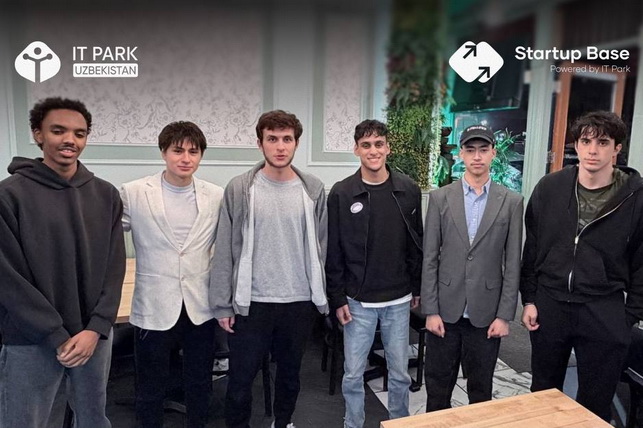
20-Year-Old Uzbek Founder Raises US$500,000 to Build Startup in San Francisco
Tashkent, Uzbekistan (UzDaily.com) — At just 20 years old, Bahodir, a native of Bukhara, has raised US$500,000 in pre-seed funding and relocated to San Francisco, the global hub of the tech industry.
His journey into programming began in his early teens with a simple Pascal program that added two numbers. Despite its simplicity, the experience sparked a lasting interest in technology. At 14, he moved to Tashkent to focus on robotics, web development, and coding.
He later discovered the global startup ecosystem through the social platform X, where founders and investors from Silicon Valley actively share insights and ideas. According to him, the platform provides equal access to knowledge regardless of geography.
One of his early projects—a Telegram bot developed around the age of 16—played a key role in gaining recognition from startup program selectors, demonstrating his ability to build real products. He later moved to Poland, where he studied and worked at IBM, while keeping his long-term goal of moving to California.
Today, his startup focuses on building monetization tools for software developers. He believes that while artificial intelligence has significantly lowered the barrier to creating applications, monetization has become the main challenge. His company is particularly exploring infrastructure around messaging platforms, including tools for building revenue-generating bots and mini-apps in Telegram.
The US$500,000 pre-seed round was secured after a single call, with investment from the CEO of Whop. According to Bahodir, at such an early stage, investment decisions are driven primarily by belief in the founder rather than metrics.
He emphasizes that in the era of accessible AI, technology alone is no longer a competitive advantage. Instead, execution speed and distribution are ключевые факторы успеха. His strategy involves maintaining a lean engineering team while prioritizing marketing and distribution channels.
His immediate goal is to achieve product-market fit, identify the right niche and audience, and scale to millions in annual revenue before raising the next funding round.
Bahodir also notes the growing presence of Uzbek and Central Asian founders in Silicon Valley, including entrepreneurs like Sardor Rakhmatulloev and Akmal Payziev, some of whom participate in leading accelerators such as Y Combinator.
He encourages aspiring entrepreneurs in Uzbekistan to prioritize learning English, actively engage in global online communities, and start building and showcasing their own projects early.
“Build great things and talk about them. Opportunities compound,” he says, adding: “You don’t need to compete with Silicon Valley immediately—first become exceptional in your own country.”
Bahodir describes entrepreneurship as a mix of persistence, experimentation, and, in his words, “a certain level of boldness to try.” Behind his rapid progress lies a series of failed attempts.
“People usually see only the successes,” he notes. His approach is simple: apply ten times to get one opportunity, build ten products so that one succeeds—eventually, something works.